
-
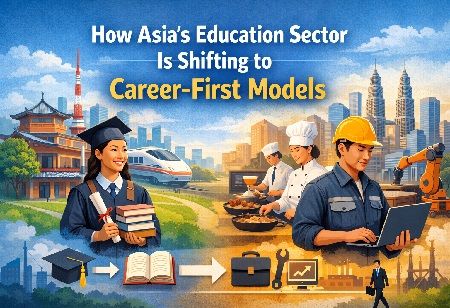
- In 2026, countries like Singapore, China, and Hong Kong are transforming their education systems by focusing on career-ready skills and real-world experience, moving beyond traditional academic models.
- The rise of hybrid programs, such as Singapore’s Offshore & Marine Digital Learning Lab, integrates academic learning with industry experience, equipping students with future-ready skills in sectors like energy and sustainability.
- Programs like Cathay Pacific’s I Can Fly are fostering global career opportunities through mentorship, leadership training, and hands-on experiences in industries such as aviation, creating pathways for students in internationally mobile careers.
In 2026, Asia's international education sector is undergoing a profound transformation, shifting from traditional academic models to career-first approaches aimed at bridging the gap between learning and workforce readiness. Countries such as Singapore, China, and Hong Kong, which have been known for their excellent education systems for a long time, are leading the charge in this revolution, with innovative programs that provide students with the skills that employers are looking for. The days when a degree was the only ticket to success are numbered, as Asian institutions are now focusing on providing students with real-world experience and training. This is a global trend, with a focus on education that is relevant to the job market of today. Education is no longer about theory but about making students industry-ready from day one. Singapore and China are leading the charge in this revolution, which is setting the tone for the future of education.
Hybrid Programs & Industry Collaboration
One of the most exciting developments in Asia’s educational sector is the rise of hybrid programs that combine academic learning with industry experience. The Singapore Institute of Technology (SIT), in partnership with Seatrium, has launched the Offshore & Marine Digital Learning Lab at its Punggol campus. This lab aims to accelerate maritime digitalization and support the energy transition by focusing on cutting-edge technologies like AI, digital twins, and smart microgrids. This collaboration is a prime example of how education can evolve to meet the demands of the workforce. Over the next three years, the lab will provide training for 700 undergraduates and an additional 1,000 continuing education learners. These initiatives are designed to prepare students with the future-ready skills needed to thrive in industries driving the future of energy and sustainability.
- Key Elements of Hybrid Programs:
- Industry-specific technologies: AI, digital twins, smart grids.
- Hands-on learning in real-world environments.
- Workforce development alongside academic learning.
- Global market alignment: Training students for future energy and sustainability sectors.
Such collaborations between academic institutions and industry players are exemplary of the career-first model, as they provide practical applications of the concepts that students learn in the classroom. Through the incorporation of the latest technologies and industry knowledge into the curriculum, institutions such as SIT are not only educating students but also immersing them in environments that simulate the realities of the modern workplace.
Also Read: How Career & Job Expos Benefit Students and Institutions
Global Partnerships: Expanding Horizons for Students
The future of education is also being shaped by an increasing emphasis on global partnerships that provide students with diverse learning opportunities and cultural exposure. In 2026, the I Can Fly Program by Cathay Pacific, which has expanded to five countries China, Singapore, Australia, Indonesia, and Vietnam, is a key example of how international collaboration fosters youth empowerment and career development. This program offers young students hands-on experiences, mentorship, and leadership training in aviation, preparing them for careers in the aviation and travel industries. In a world increasingly driven by global connectivity, initiatives like this play a vital role in providing students with the skills and networks to succeed in internationally mobile careers.
- Key Benefits of Global Partnerships:
- Industry-specific career pathways: Aviation, travel, etc.
- Mentorship and leadership training for young professionals.
- Hands-on experiences to develop career-specific skills.
- Cultural exchanges fostering global competency.
In this way, the program initiated by Cathay Pacific, which provides industry-specific training and promotes cross-cultural exchange, embodies the increasing trend of educational initiatives that put students in direct contact with industries and employers, making it easier for students to transition from education to employment. By participating in such initiatives, students are not merely learning about an industry but are actually living it.
Career-Oriented Learning & Local Partnerships
The push towards career-first education isn’t just happening at the global level; it’s also evident in local and regional initiatives aimed at improving career pathways for students. For instance, Colorado State University Global (CSU Global) has partnered with the Colorado Association of School Executives (CASE) to provide special tuition rates for K-12 educators. Through this partnership, CSU Global offers 100% online, flexible graduate-level programs that cater to the needs of over 3,300 school administrators across Colorado’s 178 districts. These programs are designed to improve leadership skills and educational administration, providing professional development opportunities that directly benefit both students and educators.
- Key Aspects of Local Career-Oriented Programs:
- 100 percent online courses for flexibility.
- Accessible tuition rates for professional development.
- Programs aligned with workforce needs: Leadership and educational administration.
- Enhanced skills for administrators and educators.
By making career-oriented educational pathways more accessible and flexible, these kinds of partnerships ensure that students can earn credentials that are directly linked to professional development. The ability to take courses online, at their own pace, allows educators to upgrade their skills without disrupting their careers, further highlighting the emphasis on career mobility and lifelong learning in Asia’s evolving education landscape.
Alos Read: E-Learning Trends Transforming the Landscape of Philippine Education
The Role of Hong Kong in Fostering Global Learning Opportunities
Hong Kong, through initiatives from the University Grants Committee (UGC), is also enhancing its educational sector by promoting national and international learning opportunities for its students. The UGC’s HK$100 million funding over three years is supporting 215 initiatives aimed at broadening students’ global perspectives and preparing them for leadership roles in the global economy. Universities like Lingnan University and The Hong Kong Polytechnic University (PolyU) are leading the charge by offering immersive global programs that include internships, cultural exchanges, and community projects.
- Highlights of Hong Kong’s Educational Initiatives:
- Intercultural competence and leadership training.
- Immersive programs focused on global exposure.
- Experiential learning in international settings.
- Community-driven projects fostering collaboration.
These programs emphasize intercultural competence, collaboration, and leadership skills that are increasingly important in today’s interconnected world. By offering experiential learning opportunities, Hong Kong’s universities are ensuring that students are not only prepared for the local job market but are also equipped to navigate the complexities of the global economy.
The Future of Career-First Education in Asia
The shift towards career-first education in Asia is about more than just adapting to the changing job market it’s about actively shaping the future of work itself. As industries evolve and technology advances, educational institutions across Asia are increasingly focused on aligning curricula with real-world needs. From internships and mentorship programs to industry-driven research and global partnerships, the international education sector in Asia is embracing models that prepare students for the careers of tomorrow.
- Core Focus Areas in Career-First Education:
- Curriculum alignment with industry demands.
- Real-world training through internships and industry partnerships.
- Global partnerships enhancing international career mobility.
- Industry mentorship providing students with career-specific guidance.
Conclusion
In this new paradigm of education, students are no longer mere receivers of knowledge but are instead active participants in their own career development. Through the provision of career-first programs that combine academic knowledge with hands-on experience, the educational institutions of Asia are working towards the development of a workforce that is ready to take on the challenges of a constantly shifting global economy. As 2026 unfolds, Asia will continue to lead the charge in this new paradigm of education.
🍪 Do you like Cookies?
We use cookies to ensure you get the best experience on our website. Read more...