How Industry-Academia Ties Are Powering UAE STEM Education

-
Across the United Arab Emirates, a quiet but consequential shift is underway. One by one, universities, hospitals, and training institutes are signing partnerships with global industry leaders, each one chipping away at the old wall between classroom learning and workplace reality. Taken individually, these agreements look like routine corporate news. Taken together, they reveal something bigger, a country deliberately engineering the talent pipeline it will need to hit its most ambitious national goals.
The pattern shows up everywhere, from STEM classrooms to operating theatres, from real estate training rooms to the emerging science of longevity medicine. And it is happening because a simple, uncomfortable truth has settled into the UAE's education policy conversation: knowledge that never touches industry is knowledge that arrives too late.
The STEM Engine
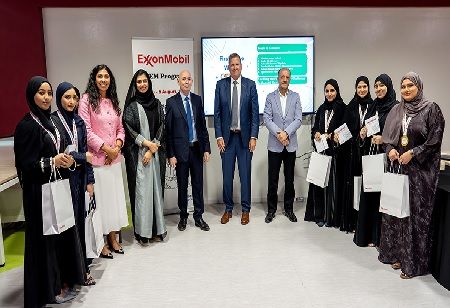 Nowhere is this more visible than in the recently elevated partnership between Abu Dhabi University (ADU) and ExxonMobil. The Memorandum of Understanding, which expands a long-running collaboration, is designed to accelerate the development of a highly skilled workforce in Science, Technology, Engineering, Mathematics, and Artificial Intelligence across the UAE, directly supporting the country's 'We the UAE 2031' vision.
Professor Ghassan Aouad, Chancellor of Abu Dhabi University, has been unambiguous about what this partnership is really trying to solve. "At Abu Dhabi University, we believe that the most impactful learning extends beyond the classroom", he said. "Our ongoing collaboration with ExxonMobil reflects a shared commitment to giving students meaningful opportunities to apply their knowledge, engage with industry experts, and develop the practical skills that employers increasingly value in dynamic fields like STEM".
He added that the goal is not simply technical competence, "By combining academic excellence with real-world experience, we are preparing graduates who are ready to drive innovation, contribute to the UAE's knowledge-based economy, and support sustainable economic growth across the region".
On ExxonMobil's side, the language is equally direct about long-term intent rather than one-off philanthropy. Mohammed Alamin, President at ExxonMobil, framed it as a continuation of an existing commitment, "We are proud to continue our partnership with Abu Dhabi University, which reflects our commitment to the UAE's long-term growth and success. Initiatives like this play an important role in preparing students for the opportunities of tomorrow".
The mechanics of the expanded partnership matter as much as the sentiment. Rather than one-time sponsorships, the agreement introduces enhanced student sponsorships, specialized training modules, exchange opportunities, and structured knowledge-exchange platforms connecting faculty, researchers, and industry professionals. The existing ExxonMobil-ADU STEM Summer Camp, which has already broadened access to STEM education for younger students, sits underneath this expanded umbrella as proof the model works before it scales further.
What makes this genuinely different from a typical corporate-sponsorship press release is the explicit link to social responsibility. The partnership's emphasis on inclusive, ethical innovation signals that ADU and ExxonMobil are trying to produce graduates who are, in the university's own words, 'socially conscious contributors to national progress', not simply technically proficient hires.
Professional Training Gets an International Stamp of Approval
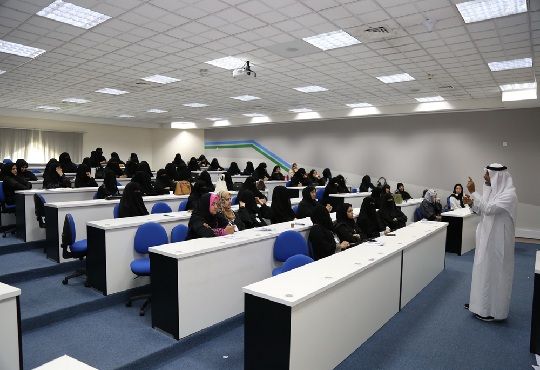 While ADU and ExxonMobil are building the STEM pipeline from the university level down, a parallel transformation is happening in corporate and professional training. London Premier Centre (LPC), a UK-based training provider with hubs spanning nine cities from London to Kuala Lumpur, has just become an official partner institution of the University of West London and secured accreditation from the British Accreditation Council (BAC), one of the world's oldest independent accreditation bodies.
This matters more than it might first appear. Corporate training in fast-growing Gulf markets has historically suffered from an inconsistency problem: too many providers, too few common standards, and no reliable way for organizations to know what 'quality training' actually means. LPC's dual achievement is explicitly designed to solve that.
Dr Adnan Haj Omar, COO of London Premier Centre, described the stakes plainly, "Our BAC accreditation and official partnership with the University of West London represent a promise of uncompromising quality. We are successfully filling a critical gap in the regional training market by offering truly internationally accredited, high-level professional development programmes that deliver practical, immediate workplace impact".
The demand data backs up why this gap needed filling. LPC reports particularly strong interest in the UAE for Artificial Intelligence, Management & Leadership, Accounting & Finance, Human Resources, and Project Management, precisely the capability areas that organizations across the GCC are racing to build under both 'We the UAE 2031' and 'Saudi Vision 2030'.
Nada Hassan, Quality Assurance Manager at LPC, was candid about how hard this recognition was to earn, "Achieving BAC accreditation was a challenging yet rewarding journey. It reflects our team's commitment to maintaining the highest standards and continuously improving the support we provide to our learners and corporate partners".
The significance here is structural, not cosmetic. By tying its own accreditation to an internationally recognized university and an independent quality body, LPC is essentially importing a globally verified quality benchmark into a regional market that badly needed one, and doing so specifically in the AI and leadership skill categories the UAE's national visions depend on most heavily.
Real Estate Gets Its Own Global Credential
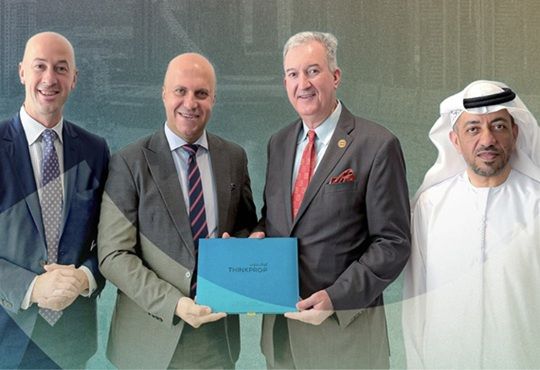 The same logic, importing internationally respected standards into a domestic professional market, is playing out in an entirely different sector: commercial real estate. ThinkProp, a UAE-based real estate training institute, has launched the CCIM Designation Programme in the country for the first time, becoming the exclusive regional gateway for The CCIM Institute.
The CCIM Designation is held by more than 13,000 professionals across over 30 countries and is widely regarded as one of the most respected credentials in commercial real estate worldwide. Structured around four intensive courses in financial analysis, market analysis, user decision analysis, and investment analysis, the pathway typically takes about 12 months to complete and culminates in a comprehensive examination.
Jasem Alhosani, Operations Lead at ThinkProp, connected the launch directly to workforce professionalization, "The launch of the CCIM Designation Programme marks an important milestone for commercial real estate education in the UAE. For the first time, professionals in Abu Dhabi and Dubai will have access to one of the industry's most respected global credentials through a structured programme delivered locally".
He added that the goal extends beyond individual certification to sector-wide capability building, aiming to "develop a stronger and more capable commercial real estate workforce, supporting informed decision-making and contributing to the continued growth of the sector".
Notably, industry data cited alongside the launch suggests CCIM designation holders achieve up to 42% more transaction conversions annually than non-designated professionals, a concrete illustration of what credentialed, industry-aligned training can deliver in measurable terms.
Healthcare Education Enters a New Frontier: Longevity Medicine
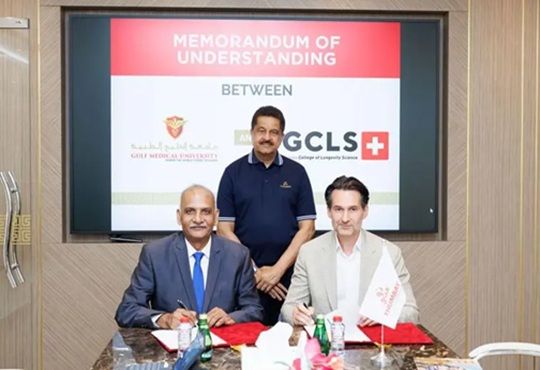 Perhaps the most forward-looking example of industry-academia collaboration in the UAE right now sits at the intersection of medicine and emerging science. Thumbay Group has signed a landmark MoU with the Geneva College of Longevity Science (GCLS), Switzerland, establishing the Thumbay Institute of Longevity Medicine at Gulf Medical University, the first private medical university in the UAE to take this step.
The partnership combines GCLS's standing as the world's first higher education institution dedicated exclusively to longevity science with GMU's academic infrastructure and Thumbay Healthcare's clinical ecosystem.
Six professional certificate programmes are launching under the agreement, spanning Clinical Longevity Medicine, Longevity Physiotherapy, Longevity Nutrition, Longevity Fitness, Peptide Medicine, and Artificial Intelligence in Healthcare, delivered in hybrid format to physicians, pharmacists, nurses, physiotherapists, nutritionists, and fitness professionals.
The urgency behind this move is backed by real data. A GCLS 2026 Global Longevity Physician Survey, gathering responses from physicians across six continents, found that 99% reported rising patient demand for longevity medicine, 44% noted growth exceeding 50% in just three years, 83% believe healthcare will shift decisively toward prevention, and 76% expect major lifespan extension breakthroughs to become realistic within 20 years.
Dr Thumbay Moideen, Founder President of Thumbay Group, framed the partnership as part of a much larger institutional ambition, "By joining hands with the Geneva College of Longevity Science, we are bringing world-class Swiss academic standards to the UAE and giving healthcare professionals across the Gulf the training this new era demands. Our vision is to transform Gulf Medical University from the No. 1 private medical university in the Gulf into the world's leading medical university".
Dr Dominik Thor, President of the Geneva College of Longevity Science, was equally clear about why credible academic infrastructure matters here specifically, "Longevity medicine is becoming an essential component of modern healthcare, but the field urgently needs education, clinical standards, and credible training infrastructure. Through partnerships with leading universities, GCLS is helping to establish the academic foundations globally, and Gulf Medical University is the ideal partner to build that infrastructure in the Middle East".
This is industry-academia collaboration operating one step ahead of demand rather than reacting to it, building the credentialing and training infrastructure for a medical specialty before it becomes mainstream, so that when it does, the UAE already has the workforce ready.
Advanced Clinical Care Follows the Same Playbook
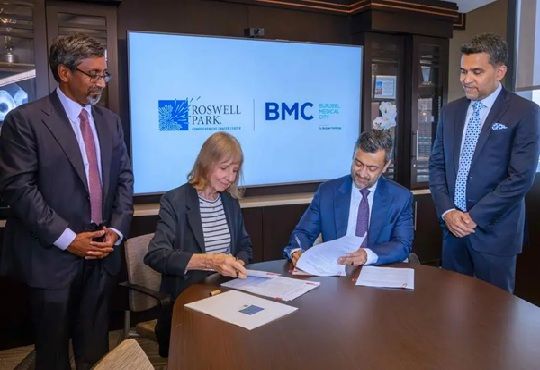 The Thumbay-GCLS model is not an isolated case in UAE healthcare. Burjeel Medical City has signed a parallel academic and clinical collaboration with Roswell Park Comprehensive Cancer Center, one of the United States' leading National Cancer Institute-designated centers, to establish a dedicated thoracic surgery program in Abu Dhabi.
Dr Shamsheer Vayalil, Chairman and CEO of Burjeel Holdings, described the regional stakes involved, "This partnership creates a sustainable pathway for patients in the UAE and across the region to access highly specialized thoracic cancer care closer to home. By combining Roswell Park's expertise with BMC's capabilities and regional reach, we aim to strengthen outcomes, build local expertise, and reduce the burden of traveling overseas for complex treatment".
Dr Candace S. Johnson, President and CEO of Roswell Park, tied the agreement to her institution's long-standing mission: "Roswell Park has a long-standing commitment to advancing cancer care through collaboration, research, and education". Dr. Sai Yendamuri, Senior Vice President and Chair of Thoracic Surgery at Roswell Park, added that the goal is capability transfer, not just service delivery, "By working with Burjeel Medical City, we can extend specialized thoracic cancer care expertise, support multidisciplinary decision-making, and help build a world-class program serving patients across the UAE and region".
Crucially, the agreement is not purely clinical. It establishes a lasting academic partnership in which the lead thoracic surgeon at BMC will hold an academic designation with Roswell Park, and both institutions will jointly develop clinical protocols, scientific programs, educational initiatives, faculty exchanges, and professional development opportunities. It is, in other words, an industry-academia collaboration wearing a hospital's clothing.
Building the Values Foundation Beneath the Skills
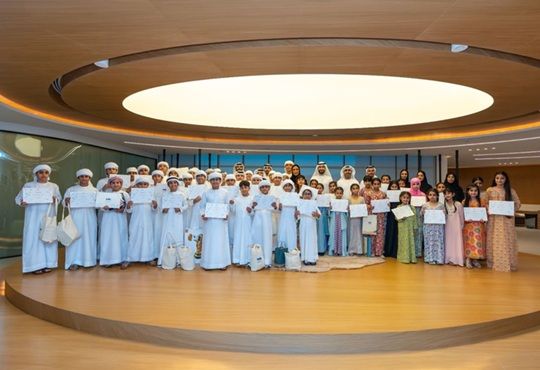 Not every UAE initiative in this space is aimed at university graduates or working professionals. The Ministry of Family and the National Academy for Childhood Development have rolled out the summer edition of the 'Jeel 71' programme, themed 'A Generation Built on Values', for children aged 9 to 13 across Abu Dhabi, Sharjah, Ajman, and Fujairah.
While Jeel 71 does not involve a corporate partner in the traditional sense, it reflects the same underlying philosophy driving the UAE's STEM and professional training partnerships: that meaningful learning happens through direct, practical experience rather than passive instruction alone. Sana bint Mohammed Suhail, Minister of Family, described the programme's intent, "Jeel 71 reflects our commitment to providing children with real-world experiences that cultivate responsibility, inspire initiative, and deepen pride in the UAE's rich heritage. We aim to shape confident children who are connected to their identity and empowered to contribute positively to society".
Dr Meera Al Kaabi, Acting President of the National Academy for Childhood Development, added that the programme is designed around integration rather than isolated activity, "Jeel 71 embodies our vision of preparing generations proud of their national identity and equipped with essential values and skills. It strengthens the family's role while advancing the objectives of the Year of Family".
Through workshops spanning financial literacy, entrepreneurship, safety and emergency response, and creative expression, Jeel 71 is quietly building the same foundational skills, critical thinking, collaboration, and practical problem-solving, that later resurface in ADU's STEM partnerships and LPC's leadership training. The pipeline, in effect, starts far earlier than most industry-academia narratives acknowledge.
Also Read: Nurturing Tomorrow's Innovators: STEM Education in Myanmar
Closing It Up!
Individually, these initiatives belong to different beats, higher education, corporate training, real estate, medicine, and childhood development. Collectively, they describe a single, deliberate national strategy. The UAE is not waiting for its education system to organically produce industry-ready talent.
It is actively importing international academic credibility, wiring it directly into local institutions, and doing so simultaneously across the entire age and career spectrum, from a 9-year-old in a Jeel 71 workshop to a physician pursuing a Longevity Medicine certificate at Thumbay.
The common thread in every quote above is a rejection of theoretical learning as sufficient on its own.
For a country explicitly building toward a 2031 vision centered on knowledge-driven growth, that is not a minor shift. It is the entire strategy, made visible one partnership at a time.
🍪 Do you like Cookies?
We use cookies to ensure you get the best experience on our website. Read more...