Preparing Students for Business Analytics, Cybersecurity & GCC Careers

-
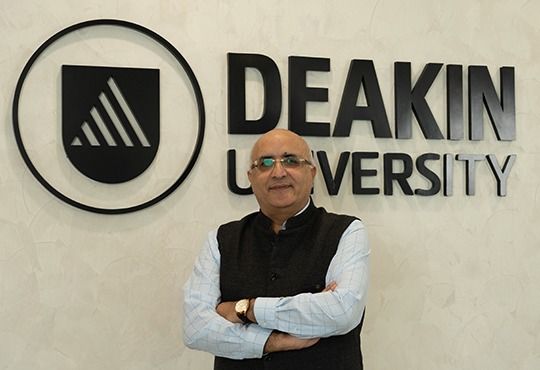
Dr Deepak Bajaj brings with more than three decades of international experience in academia, risk management, and the built environment. He holds a PhD in Project Management, Building, and Risk Management from the University of Technology Sydney and a Master's degree from the University of New South Wales (UNSW). He previously served as the Head of Institution and Director of the RICS School of Built Environment at Amity University and has held a long-standing role as a Visiting Professor at SKEMA Business School. A Fellow of the Royal Institution of Chartered Surveyors (FRICS), he chairs RICS assessment panels in both India and the UK and is widely recognized for his work on Global Capability Centres (GCCs) and future-ready education.
In an interaction with M R Yuvatha, Senior Correspondent, Asia Education Review, Dr Deepak Baja shared his insights on the growing importance of applied AI literacy, industry-aligned internships, and cross-cultural collaboration as the key drivers that will prepare graduates for high-value roles in Business Analytics, Cybersecurity, and GCC operations.
In an era where artificial intelligence is rewriting the rules of business analytics, cybersecurity, and enterprise operations, the skills that once defined a 'job-ready' graduate are being redrawn in real time. As Global Capability Centres (GCCs) reposition India as the operating core of global enterprise, and as AI-driven tools transform how organisations analyse data, detect threats, and make decisions, the demand for professionals who can work alongside intelligent systems has never been sharper.
Bridging this gap requires more than theoretical knowledge it calls for industry-aligned curricula, hands-on exposure to AI-powered tools, and mentorship rooted in real-world practice. This is precisely the space where forward-thinking institutions are stepping in, equipping students not just to enter the workforce, but to lead within it.
From an industry hiring standpoint, what specific skill gaps do you consistently see in fresh graduates applying for roles in Business Analytics, Cybersecurity, or GCC (Global Capability Center) operations and how can academic institutions close them?
From an industry hiring perspective, the biggest gap is not technical knowledge alone, but the ability to apply it in real-world business scenarios. Employers are increasingly looking for graduates with strong analytical thinking, problem-solving, AI literacy, data interpretation, and the ability to collaborate across global teams. As AI becomes embedded across industries, graduates must be able to use AI tools responsibly, validate AI-generated insights, and combine them with human judgment. Organizations also expect candidates to communicate data-driven insights effectively, think critically, and adapt quickly to changing business needs. Equally important are communication, interpersonal skills, adaptability, and a continuous learning mindset, which are critical for success in Business Analytics, Cybersecurity, and Global Capability Centers (GCCs).
Instutions like Deakin GIFT City, addresses these gaps through the Deakin GIFT City Career Services (DGCS). DGCS complements academic learning with industry mentoring, career coaching, resume building and developing professional profiles on platforms like LinkedIn, mock interviews, employer networking, internships, and industry-led workshops. Our focus is to ensure that students graduate not only with technical expertise but also with the professional and workplace-ready skills that employers value most.
The biggest gap in today's workforce is not technical knowledge alone, but the ability to apply it in real-world business scenarios.
GCCs are increasingly taking on high-value, strategic work rather than just back-office functions. What capabilities or mindset should students build today to be ready for this shift in GCC roles over the next few years?
India's GCC ecosystem is expected to grow from approximately 2100 centres today to nearly 5,000 by 2030, with a much larger share of work focused on AI, analytics, cybersecurity, product development, and enterprise decision-making rather than traditional support functions.
According to EY’s GCC Vision 2030, the sector is expected to grow to US$110 billion by 2030 and employ 4.5 million professionals, with increasing focus on AI, analytics, cybersecurity, engineering, and product innovation rather than transactional support work. The World Economic Forum’s Future of Jobs 2025 report identifies analytical thinking, resilience, and technology skills among the fastest-growing capabilities worldwide.
The skills that will matter most are analytical thinking, problem-solving, AI literacy, data interpretation, and the ability to work across global teams. At Deakin GIFT City, we have already embarked on this journey with some of the finest global GCC players as a part of our campus recruitment collaboration. I am pleased to share that maximum number of our students are regularly hired by GCCs and other associated companies for high value , strategic work.
To succeed in this environment, students must go beyond technical proficiency and develop strong problem-solving, business acumen, and AI literacy. Employers are increasingly seeking professionals who can interpret data, manage risk, influence decisions, and collaborate across global teams.
Also Read: AI Literacy Gap: Why Asia's Classrooms Race to Catch Up with Tech
With AI and automation reshaping analytics and cybersecurity workflows, which technical tools, platforms, or certifications should students prioritize right now to stay relevant, and which are becoming less important?
Students should first build strong foundations in data analysis, AI literacy, ethical AI, and cybersecurity fundamentals before focusing on tools. Core technical skills should include Excel, SQL, Python, R, Power BI, and Tableau, along with cloud platforms such as AWS, Microsoft Azure, and Google Cloud.
Exposure to enterprise systems like SAP and industry-recognised certifications from LinkedIn Learning, PwC, TDWI, Gartner, and cloud providers can further strengthen employability.
What is becoming less important is memorising code, tool-specific features, or relying solely on Excel. Employers increasingly value professionals who understand concepts, can interpret data, and use AI to solve real business problems.
What kind of real-world exposure internships, live projects, industry mentorship, or case competitions has proven most effective in preparing students for these career tracks, based on what you've seen work?
Internships remain the most valuable form of industry exposure, providing students with practical experience and workplace readiness. Equally impactful are live industry projects and capstone projects, where students work on real business challenges with companies in GIFT City, including organisations such as KPMG, EY, and other industry partners. These experiences help bridge the gap between classroom learning and industry expectations.
Participation in industry mentorship, case competitions, and hackathons further strengthens problem-solving, teamwork, and innovation. Alongside technical expertise, strong communication and presentation skills enable graduates to effectively convey insights and collaborate with business stakeholders, making them more job-ready.
For students choosing between Business Analytics, Cybersecurity, and GCC-focused roles, what advice would you give on how to evaluate long-term career growth, compensation trends, and job stability across these three paths?
Students should evaluate careers based on long-term demand rather than short-term salary trends. Business Analytics and Cybersecurity are both core capabilities that GCCs are actively expanding as they move into AI-driven decision-making, digital transformation, and cyber resilience. India's target of 5,000 GCCs by 2030 is expected to significantly increase demand for talent across both domains.
Business Analytics offers strong growth opportunities for those interested in data, AI, and business strategy, while Cybersecurity continues to benefit from a persistent global skills shortage and rising cyber threats. Recent ISC2 workforce studies also highlight cybersecurity as one of the most difficult skill areas for employers to recruit, creating sustained global demand.
We are already seeing this demand translate into outcomes for our students. Many are building successful careers in leading Global Capability Centres (GCCs), with NAB Innovation Centre India being a recurring employer. NAB continues to recruit our graduates because of the strong alignment between our curriculum and the practical skills the industry requires, demonstrating the value of industry-integrated learning.
Ultimately, the best career choice lies at the intersection of personal aptitude and market demand. Students who develop expertise in analytics, cybersecurity, and AI-enabled business skills will be well positioned for long-term career growth, competitive compensation, and global opportunities.
🍪 Do you like Cookies?
We use cookies to ensure you get the best experience on our website. Read more...