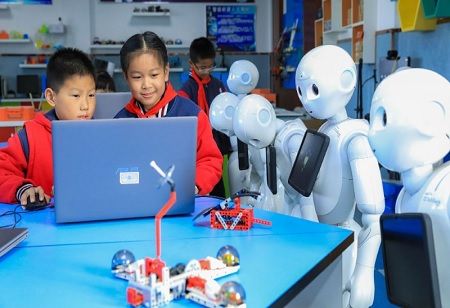
- AI now covers 87.7 percent of Beijing's primary and secondary schools.
- AI applications aim to improve teaching efficiency and personalized student support.
- The city is developing a comprehensive AI education ecosystem with industry collaborations.
Beijing is pushing forward with the integration of artificial intelligence (AI) in its education system. As of this year, AI applications have been implemented in 87.7 pervent of the city's primary and secondary schools. This is part of a broader strategy to enhance learning, teaching, and student support through AI technologies, with the aim of promoting these tools in all schools by 2025.
The city has introduced several key initiatives to achieve this, such as the 'Jingwa' AI platform, which connects schools, families, and communities, and the launch of an education AI marketplace. Schools like Beijing No 80 High School are leading the way by partnering with major tech companies like Intel and Lenovo to open AI-focused labs.
AI tools are already helping in classrooms. For example, the 'Jingxiaojian' platform, developed by China Telecom, is now used in over 60 schools, benefiting 60,000 students and teachers. TAL Education Group is also piloting AI projects to improve learning efficiency and reduce the workload on students.
Also Read: KNU Partners with FPT University to Launch Overseas Franchise Program
While Beijing is making strides with AI in education, the local authorities are also working to strengthen security and ethical standards around AI tools. There’s a growing focus on human-machine collaboration, ensuring that AI supports teachers while keeping the human element of care and guidance intact.