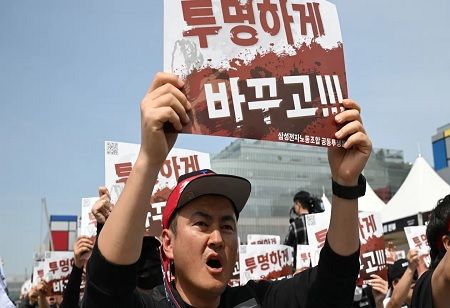
With an 18-day Samsung strike set to begin May 21, South Korea’s leaders urge compromise as fears grow over supply-chain disruption, market volatility and potentially huge economic losses while the union presses for a bigger, formalized bonus system.
South Korea is bracing for a showdown that could rattle global tech markets, more than 47,000 Samsung Electronics workers have signaled an 18-day strike beginning May 21 unless fresh concessions are made. What began as a dispute over bonus formulas has swollen into a national flashpoint, drawing unusually public warnings from the president and cabinet ministers and fueling alarm across Korea’s export-driven economy.
At the center of the storm is the union’s demand to overhaul Samsung’s performance bonus system. Workers want bonuses tied to 15% of operating profit, an end to payout caps and a formal, predictable structure for future rewards. Samsung’s management has offered to allocate 10% of operating profit to bonuses plus a one-time special payment a move the union views as short of what it calls fair and transparent compensation for a workforce that helped power Samsung to global dominance.
President Lee Jae Myung entered the fray on Monday with an appeal for balance. Posting on X in Korean, Lee wrote that “labor must be respected as much as business, and corporate management rights must be respected as much as labor rights,” warning that extremes bring reversal. His words echo a line increasingly pushed by senior officials urging both sides to find middle ground before the May 21 deadline.
The government has been unusually explicit about the economic risks. Prime Minister Kim Min-seok warned negotiators that this week’s talks represent a final chance to avert the strike and suggested authorities could pursue “emergency adjustments” if industrial action threatens significant harm. Under Korean law, such an adjustment can suspend strikes for up to 30 days when the dispute is judged to endanger the economy or public life.
The numbers that make Seoul nervousFinance Minister Koo Yun Cheol’s blunt message last week ‘ strikes must never happen under any circumstances’ reinforced the urgency. Officials stress the numbers: Samsung Electronics generates roughly 22.8% of South Korea’s exports, accounts for about 26% of market capitalization and contributes an estimated 12.5% of GDP in revenue terms. That concentration amplifies the stakes for Seoul and for investors worldwide.
Market reaction has been immediate. Samsung shares jumped as much as 6.65% on Monday before settling back, reflecting investor relief over progress in talks but also signaling the market’s sensitivity to strike headlines. Analysts warn that overreliance on a small set of mega-cap firms leaves Korea more exposed to shocks from factory downtimes to shifts in global data-center demand.
Both sides downplay some of the worst-case figures. The government’s stark projection of up to 100 trillion won in economic damage should wafer scrapping follow disrupted chip production sits alongside Samsung union estimates that an 18-day strike could cost the company roughly 30 trillion won. The union, for its part, says earlier production pauses were routine for equipment inspection, maintenance and process adjustments and has criticized authorities for leaning too heavily on company claims when assessing economic harm.
Complicating the mood is a rare public apology from Samsung chairman Lee Jae-yong, who on Saturday asked customers worldwide to forgive the “worry and anxiety” caused by the standoff. That gesture underscores the reputational and operational anxiety at the heart of the talks, this is not merely a domestic labor dispute, but a test of how quickly Korea’s industrial engine can respond when its largest exporters stall.
Also Read: Samsung Launches Second Wave of Galaxy Student Campus Student Ambassadors
Negotiations have been intense, a final round between union leaders and management was slated for Monday. With public pressure mounting, the meeting carries twin imperatives: secure a deal that respects workers’ pay demands, while keeping factories humming and customers reassured. For Seoul, the calculus is political as much as economic. Government voices pushing for resolution risk alienating constituents if pressure tips too far against labor; meanwhile, business leaders warn prolonged disruption could dent investment and employment broadly.
What happens in the next few days will matter far beyond Samsung’s gates. If a compromise is struck, the deal could stabilize markets and set a template for labor-management bargaining at other Korean conglomerates. If talks fail and a strike proceeds, expect immediate supply-chain headaches, renewed scrutiny of market concentration, and a political aftershock as leaders scramble to contain fallout.
Negotiators have one last chance to bridge a gap that now carries outsized national consequences. For millions watching investors, customers and workers alike the outcome will signal how Korea balances growth, corporate power and the rights of labor in an increasingly fragile global tech landscape.