
-
Northwest Normal University in Lanzhou, Gansu province has launched a specialised training programme on artificial intelligence and digital education for education officials and university representatives from Central Asia.
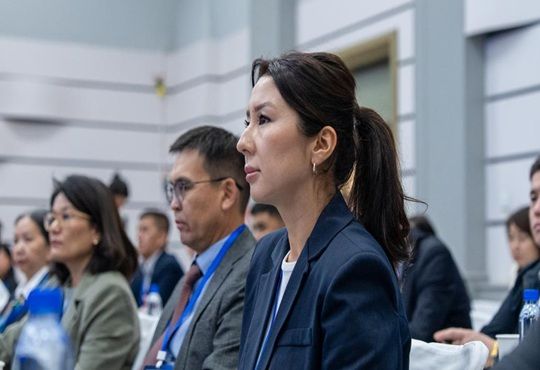
The nine-day programme, which opened on 13 September 2026, has brought together 27 participants from Kyrgyzstan and Uzbekistan. The opening ceremony was held at the university campus, marking a focused effort to deepen educational cooperation between China and Central Asian countries in the rapidly evolving field of digital learning.
The curriculum centres on three core areas: the role of artificial intelligence in global educational transformation, China’s national digital education strategy, and the practical application of AI technologies in both higher education and basic education. Sessions are designed to combine theoretical insights with real-world case studies drawn from China’s experience in integrating digital tools into teaching, learning and institutional management.
Organisers said the programme aims to foster meaningful exchanges between Chinese education institutions and their Central Asian counterparts, while also creating bridges with the digital education industry. By bringing together policymakers, university administrators and education specialists, the training seeks to share practical knowledge that participants can adapt to their own national contexts.
China has placed strong emphasis in recent years on the digitalisation of education as part of its broader modernisation goals. The country’s approach includes large-scale development of online learning platforms, AI-supported teaching tools, smart classrooms and data-driven education management systems. The training programme at Northwest Normal University offers participants direct exposure to these developments and the policy frameworks that support them.
For the visiting officials and academics from Kyrgyzstan and Uzbekistan, the programme provides an opportunity to examine how AI can address common challenges in education systems, including expanding access, improving teaching quality, supporting teacher professional development and enhancing institutional efficiency. Discussions are expected to cover both opportunities and practical considerations around infrastructure, data privacy, teacher training and equitable access.
The choice of Northwest Normal University as the host institution reflects Gansu’s growing role in educational and cultural exchanges with Central Asia. Located in northwest China, the province maintains longstanding historical and geographical links with the region. The university itself has developed expertise in teacher education and educational technology, making it a suitable venue for this specialised programme.
Participants will engage in a mix of lectures, workshops, institutional visits and interactive sessions over the nine days. The schedule is structured to allow time for dialogue between Chinese experts and Central Asian delegates, encouraging two-way exchange rather than one-directional knowledge transfer. Organisers hope the programme will lead to longer-term collaboration, including joint research, faculty exchanges and possible pilot projects in digital education.
The initiative comes at a time when countries across Central Asia are exploring ways to modernise their education systems and incorporate emerging technologies. Artificial intelligence and digital tools are increasingly viewed as important means to improve learning outcomes, bridge urban-rural gaps and prepare students for a technology-driven economy. By sharing its experience, China positions itself as a partner in this process.
Beyond the formal sessions, the programme is expected to facilitate informal networking among the 27 participants and Chinese counterparts. Such connections can support future institutional partnerships and help identify areas of mutual interest in curriculum development, teacher training and technology adoption.
Northwest Normal University has framed the training as part of broader efforts to strengthen people-to-people ties and educational cooperation under frameworks of regional collaboration. The focus on practical application particularly how AI is used in classrooms and university administration—distinguishes the programme from purely academic seminars.
As the nine-day schedule progresses, participants will examine case studies of successful digital education initiatives in China, discuss policy design and explore the role of industry partners in developing educational technology solutions. The inclusion of industry perspectives is intended to give delegates a fuller picture of the ecosystem that supports digital transformation in education.
The opening of the programme on 13 September was marked by formal remarks highlighting the shared interest of China and Central Asian countries in advancing quality education through technology. Officials present underscored the value of mutual learning and the potential for sustained cooperation in this field.
By the conclusion of the training, participants are expected to return with concrete insights and possible action points for their own institutions and education ministries. The programme represents one of several recent initiatives aimed at expanding educational dialogue between China and Central Asia in the digital age.
Also Read: Engineering Day 2026: 7 Unique Courses for Future Careers Today
Northwest Normal University’s decision to host the programme underscores the growing importance of AI and digital tools in international education cooperation. As countries seek to equip their education systems for future challenges, structured exchanges of this kind offer a practical platform for sharing experience, building capacity and exploring collaborative opportunities.
The nine-day programme continues through the coming week in Lanzhou, with sessions designed to balance technical content, policy discussion and cross-cultural exchange.
🍪 Do you like Cookies?
We use cookies to ensure you get the best experience on our website. Read more...