
-
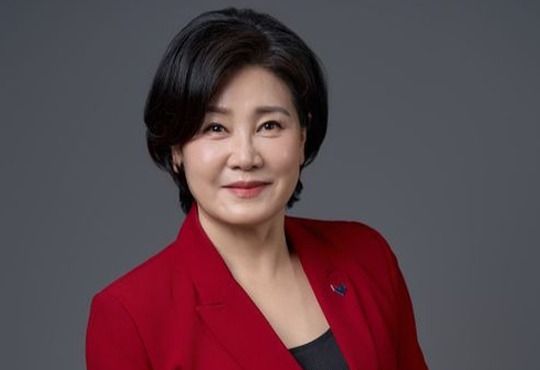
Sunmee Choi previously served as Founding Dean of VinUniversity’s College of Business and Management and currently holds a professorship at Yonsei University’s School of Business in Seoul, Korea.
At Yonsei, she has held senior leadership roles including Vice President for International Affairs, Director of Graduate Programs, and Associate Dean of the School of Business. For 20 years beginning in 2003, she was a long-standing visiting professor at ESSEC Business School in Paris. She currently serves on the International Advisory Board of Nyenrode Business School in the Netherlands and is an Outside Member of the Board of Directors at SK Chemical in Korea.
Choi brings extensive experience in global academic partnerships, institutional leadership, and service operations. Her work focuses on strengthening international collaboration, industry engagement, and academic excellence, contributing to the development of future-ready talent and institutional reputation at both VinUniversity and Yonsei University.
In an interaction with M R Yuvatha, Editor, Asia Education Review, Sunmee Choi shares insights from her perspective on rethinking talent development in the era of AI and global collaboration.
Artificial intelligence is fundamentally reshaping not only industries but also the very purpose of higher education. As automation accelerates, geopolitical dynamics continue to evolve, and new technologies transform the nature of work, universities face growing pressure to prepare graduates for careers that may not yet exist. In this rapidly changing environment, success can no longer be measured solely by what students know at the moment of graduation. Instead, universities are increasingly judged by how effectively they equip graduates to keep learning throughout their lives, adapt to continuous change, collaborate across cultures, and generate positive impact over the course of their careers.
For emerging economies such as Vietnam, this challenge presents a distinctive opportunity. Rather than simply replicating traditional models of higher education inherited from earlier industrial eras, institutions have the chance to design educational ecosystems that deliberately integrate global partnerships, meaningful industry engagement, research excellence, and comprehensive student development. Such an approach is especially relevant as Vietnam advances its transition toward an innovation-driven economy. The country’s strategic priorities in advanced manufacturing, artificial intelligence, healthcare, finance, and digital technologies require a new generation of talent capable of operating confidently in complex, technology-rich, and internationally connected environments.
Across leading universities worldwide, three interconnected priorities are emerging as essential to this transformation: meaningful global collaboration, authentic experiential learning, and whole-person development. Together, these priorities are redefining how institutions prepare graduates for an increasingly complex and interconnected world. VinUniversity offers a concrete illustration of how these global trends can be translated into institutional practice within the Vietnamese context.
As higher education continues to evolve alongside rapid advances in artificial intelligence and digital technologies, the institutions most likely to succeed will be those that deliberately combine academic excellence with meaningful collaboration, authentic experiential learning, and holistic student development.
Building Global Collaboration as a Foundation
VinUniversity was established through strategic collaborations with Cornell University and the University of Pennsylvania. Academic leaders from these institutions worked closely with the founding team to shape curricula, governance structures, quality assurance systems, and core educational practices. These partnerships supplied a strong international foundation while still allowing the university to remain responsive to Vietnam’s national development priorities. The result has been an institution that combines global academic standards with a clear commitment to local relevance.
Today, VinUniversity is home to approximately 200 full-time faculty members and researchers. Around 40 percent of them are international scholars drawn from 18 countries, bringing diverse academic traditions, research methodologies, and professional experiences into the classroom and laboratory. This global faculty composition enriches the learning environment in tangible ways.
Students are exposed daily to different perspectives, which strengthens their critical thinking, communication skills, and intercultural competence capabilities that are indispensable in an interconnected world. At the same time, VinUniversity has become an increasingly attractive destination for overseas Vietnamese scholars. The university has achieved notable success in recruiting high-calibre academic talent and currently counts 21 scientists ranked among the world’s top 2 percent most-cited researchers.
International collaboration at VinUniversity extends well beyond faculty recruitment. Partnerships with institutions such as Nanyang Technological University support joint research initiatives and faculty exchange. The VinUniversity Assistant Professorships Program (VAP) actively attracts promising early-career researchers from around the world, helping to build a vibrant and internationally competitive academic community. For students, a range of opportunities including exchange programmes, overseas internships, research placements, and the Global Exchange Student Ambassador Scholarship (GESA) broadens horizons and strengthens global readiness. These experiences allow students to test their knowledge in different cultural and professional settings and to return with deeper insight and greater confidence.
Turning Knowledge into Capability Through Experiential Learning
While internationalisation expands intellectual and cultural horizons, experiential learning is what transforms knowledge into practical capability. Employers consistently emphasise the importance of problem-solving ability, teamwork, clear communication, adaptability, and sound professional judgement. These competencies are developed most effectively through authentic experience rather than through classroom instruction alone. Recognising this reality, VinUniversity has made experiential learning an integral part of the educational journey.
Students regularly participate in research projects, entrepreneurship initiatives, consulting assignments, community engagement activities, internships, clinical placements, and multidisciplinary capstone projects. These experiences deliberately connect academic knowledge with real-world challenges. One notable example is the Industry Solutions Studio. Through this platform, industry partners present genuine business and societal problems. Students then work alongside faculty members and industry mentors to develop practical solutions. The arrangement creates mutual benefit: students gain first-hand exposure to complex organisational issues, employers receive fresh perspectives and potential talent pipelines, and faculty members maintain ongoing engagement with evolving industry practice.
Developing the Whole Person for a Complex World
Whole-person development constitutes the third essential dimension of future-ready education. Technical expertise remains indispensable, yet employers increasingly seek graduates who also demonstrate resilience, ethical judgement, empathy, creativity, leadership capacity, and the ability to learn continuously. At VinUniversity, these qualities are articulated through the EXCEL Graduate Attributes and are reinforced by a wide array of curricular and co-curricular experiences. Leadership roles, entrepreneurial ventures, community service, international exposure, and interdisciplinary collaboration all contribute to students’ personal and professional growth. The Co-Curricular Profile (CCP) provides a structured record of these experiences, recognising achievements beyond formal academic coursework and encouraging students to pursue holistic development throughout their time at the university.
The convergence of global collaboration, experiential learning, and whole-person development reflects a broader transformation underway in higher education. Universities are gradually evolving from traditional knowledge providers into dynamic innovation ecosystems. In these ecosystems, students, faculty, industry partners, government agencies, and international collaborators interact continuously. The institutional role expands beyond educating individual graduates to facilitating research, supporting innovation, and helping address pressing societal challenges.
No single institution can prepare future talent in isolation. Governments establish enabling policy environments and long-term strategic direction. Industry articulates evolving workforce needs and provides authentic challenges and opportunities. International partners contribute complementary expertise, research capacity, and diverse perspectives. Universities serve as the integrating force, bringing these elements together to create learning environments that prepare graduates to contribute effectively at the local level while engaging confidently on the global stage.
Also Read: Vietnam Launches Asia Green Hackathon For Student Innovators
Looking Ahead!
As higher education continues to evolve alongside rapid advances in artificial intelligence and digital technologies, the institutions most likely to succeed will be those that deliberately combine academic excellence with meaningful collaboration, authentic experiential learning, and holistic student development. Such approaches prepare graduates not merely to enter the workforce but to navigate careers characterised by continuous change, ambiguity, and the need for lifelong learning.
For Vietnam, this transformation represents a significant opportunity to cultivate talent capable of supporting long-term economic and social development. More broadly, it reflects a global shift in the mission of higher education from the transmission of existing knowledge to the cultivation of adaptable, responsible, and globally engaged citizens. These are the graduates equipped to create lasting value for their communities and for the wider world in an era defined by artificial intelligence and deepening international interdependence.
🍪 Do you like Cookies?
We use cookies to ensure you get the best experience on our website. Read more...