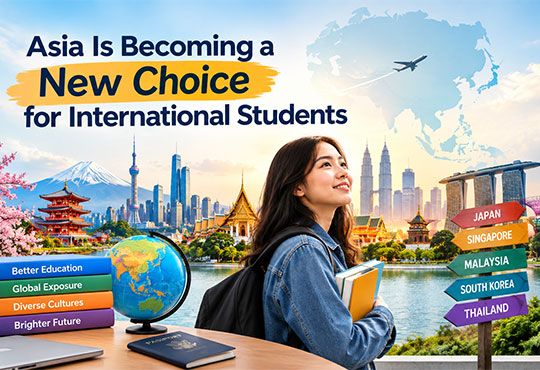
Asia Is Becoming a New Choice for International Students

-
Asia is becoming an increasingly important destination for international students as universities across the region strengthen their academic programmes, international partnerships and career opportunities.
Countries such as Malaysia, Japan, South Korea, Singapore, China and Hong Kong are attracting students who are looking for quality education while also considering affordability, career prospects, cultural experience and proximity to home.
The changing education landscape is giving students more choices beyond traditional destinations such as the United States, United Kingdom, Canada and Australia. At the same time, universities across Asia are becoming more internationally connected, creating opportunities for students to study in rapidly developing economies.
Asia's Growing Appeal

One of the biggest changes in international education is the increasing interest in studying within Asia itself. Students from countries such as India, China, Vietnam, Indonesia and Nepal are increasingly considering universities in other Asian countries.
For many students, the decision is practical. Asian destinations can offer comparatively manageable tuition and living costs, shorter travel distances and greater cultural familiarity. At the same time, several universities in the region have developed strong reputations in areas such as engineering, technology, business, medicine and research.
Malaysia is a strong example of this changing landscape. The country has been actively strengthening its position as an international education hub and attracting students from different parts of the world.
“Malaysia isn’t an option anymore, it’s become a preferred destination for international students.” — Hadil El-Agami,Head of Global Talent Acquisition, The PIE
The statement reflects how some Asian destinations are moving beyond being considered alternatives and are increasingly being viewed as destinations in their own right.
Students Are Becoming More Strategic

International students are also becoming more careful about where they invest their time and money.
University rankings remain important, but students and families are increasingly considering the total cost of education, scholarship availability, employability, internships, industry connections, accommodation and post-study opportunities before selecting a university.
This broader decision-making process is changing how students approach international education.
Instead of choosing a destination simply because it has a strong global reputation, students are increasingly comparing what they can actually gain from studying there.
“The desire to study abroad remains one of the most resilient ambitions of learners around the world.” — Omar Chihane, Global General Manager, TOEFL, ETS
His observation reinforces an important point: demand for international education remains strong, but students are becoming more thoughtful about the destinations, programmes and opportunities they choose.
Career Opportunities Matter More

The relationship between education and employment is becoming increasingly important in international student decisions.
Students want to know whether their chosen programme will help them build relevant skills and access career opportunities after graduation.
This is encouraging universities across Asia to strengthen links with companies, research institutions and industry partners.
Countries with growing technology, finance, healthcare, engineering and manufacturing sectors can offer students opportunities to combine classroom learning with exposure to rapidly developing industries.
For students, this can provide an advantage : They can gain an international education while remaining connected to some of the world's fastest-growing economic regions.
The Rise of Intra-Asian Education

Another important development is the growing movement of students within Asia itself.
Students from India, China, Vietnam, Indonesia, Nepal and other countries are increasingly considering universities in neighbouring or nearby countries. This is creating a more connected regional education ecosystem.
The attraction can be practical. Studying within Asia can mean shorter travel distances, greater cultural familiarity, comparatively manageable costs and opportunities to build careers in rapidly developing Asian economies.
Regional cooperation is also helping support this movement. UNESCO's Asia-Pacific higher-education framework promotes the recognition of qualifications and greater academic mobility across participating countries, helping students pursue further education and opportunities across borders.
This means Asian students can increasingly think about higher education as a regional opportunity, rather than limiting their choices to their home country or traditional Western destinations.
What Students Should Consider Before Choosing an Asian University ?
The growing number of Asian education destinations gives students more opportunities, but it also makes careful research important.

Before applying, students should consider :
- University accreditation and recognition
- Total tuition and living expenses
- Scholarship opportunities
- Language of instruction
- Internships and industry exposure
- Graduate employment opportunities
- Post-study work regulations
- International student support
- Accommodation and living conditions
- Recognition of the qualification in the student's home country
Students should also look beyond the overall university ranking and examine the specific programme they want to study.
A university may have a strong overall reputation but offer limited opportunities in a particular subject.
Also Read : Teachers Day 2026: How AI Is Quietly Making Great Teachers Even Better
A Changing Education Map for Asian Students

Asia's growing popularity does not mean students are abandoning traditional destinations. Instead, the international education market is becoming more diverse and competitive.
Students now have a wider range of destinations to consider, while universities across Asia have an opportunity to attract international talent by offering high-quality education, practical career pathways and strong international experiences.
For Asian students in particular, studying within the region can provide an opportunity to gain international exposure while remaining closer to home. For students from outside Asia, the region offers access to some of the world's fastest-growing economies and increasingly connected academic ecosystems.
The change also creates greater competition among Asian universities. Institutions will need to provide more than academic qualifications. Career support, research opportunities, industry partnerships, international exposure and student experience will increasingly influence how students evaluate universities.
As Asian universities continue to strengthen their international programmes and regional partnerships, the region is becoming an increasingly important part of global higher education.
For students, this creates a valuable opportunity instead of viewing Asia simply as an alternative to traditional study destinations, they can consider the region based on education quality, affordability, career potential and long-term value.
Asia is therefore not simply gaining more international students it is becoming a more competitive and diverse part of the global education landscape.
🍪 Do you like Cookies?
We use cookies to ensure you get the best experience on our website. Read more...