- Systems should focus on skills, critical thinking, and real-world learning rather than rote education.
- Education must prepare students to create opportunities through innovation, not just seek employment.
- Collaboration across South Asia can help build future-ready, skill-driven education systems.
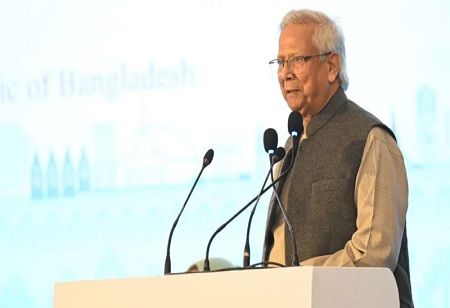
Bangladesh Chief Adviser Professor Muhammad Yunus has urged academics across South Asia to rethink education systems and align them with the real aspirations, skills, and expectations of young people. Speaking at the opening of the three-day South Asian Regional Conference on State of Higher Education and Future Pathway (SARCHE 2026) in Dhaka, he stressed that education must move beyond traditional job preparation and respond to rapid social and economic change.
Professor Yunus said current education models remain overly job-oriented and often label students as failures if they do not fit into predefined employment paths. He questioned whether the true purpose of education is simply to prepare students for jobs, arguing instead that education should empower young people to think independently, create opportunities, and lead change. According to him, creativity and imagination, not compliance are the core strengths of the youth.
Highlighting the role of students in Bangladesh’s 2024 uprising, Yunus said young people demonstrated courage, clarity of purpose, and a desire for systemic change, qualities that education systems often fail to nurture. He emphasized that universities must reflect on what they teach and whether classroom learning prepares students for real-world leadership, entrepreneurship, and civic responsibility.
Also Read: Charles Sturt University Expands Education Access in Sri Lanka
Yunus also called for stronger regional collaboration in higher education and academic exchange, noting that shared challenges across South Asia demand shared learning and solutions. He said educators must act quickly, as outdated systems risk falling behind fast-moving youth-driven change.
The conference, supported by the World Bank and Bangladesh’s University Grants Commission, brings together global and regional experts to discuss the future of higher education. Yunus urged participants to focus on skills, innovation, and youth empowerment to build education systems that create job creators, not just job seekers.