
-
Synopsis
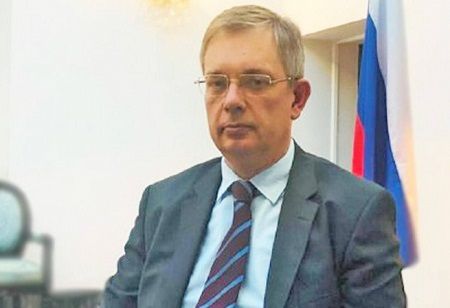
Denis Alipov said Russia is seeking stronger education ties with India through greater student exchanges, academic collaborations, and research partnerships. The move aims to expand cooperation in science, technology, medicine, and higher education while strengthening long-term people-to-people relations between the two nations.Russia-India education cooperation is gaining renewed momentum as both countries look to strengthen academic partnerships, expand student mobility and deepen scientific collaboration in the coming years. Speaking at the inauguration of the second Russia-India Education Summit, Russian Ambassador to India Denis Alipov described education as a potential 'strong pillar' of the broader India-Russia strategic partnership, emphasizing that both nations have significant opportunities to benefit from each other’s academic strengths and educational systems.
The summit, organized by Rossotrudnichestvo with support from the Russian Embassy in India, officially began on Wednesday and will continue through May 29. The event has brought together representatives from more than 50 leading higher educational institutions, along with policymakers, academic experts, researchers and members of public and political circles from both countries. The large participation reflects growing interest in expanding educational cooperation between India and Russia at a time when global higher education networks are rapidly evolving.
Addressing the gathering during the inaugural session, Alipov highlighted the long history of collaboration between the two countries in the field of education. He stressed that India and Russia have maintained strong academic ties for decades, particularly in areas such as medicine, engineering, science and technology. According to the ambassador, the current focus is not only on maintaining those traditional strengths but also on identifying new opportunities for collaboration in emerging sectors and advanced research.
“The India-Russian Educational Summit is a welcome development. Both our countries have a long-standing tradition and history of cooperation and ties in education. We are very eager to explore newer avenues in education cooperation”, Alipov says.
The ambassador pointed out that the number of Indian students choosing to study in Russia has increased considerably in recent years. Russia continues to attract Indian students, particularly in medical education, due to its established universities, globally recognized programs and comparatively affordable tuition costs. At the same time, Russian universities are also increasing their presence in India through academic partnerships, student exchange initiatives and collaborative educational programs.
Also Read: China and Thailand to Partner on Lunar Research Station
“Russia has rigorous education standards. India has progressed a lot in educational standards. There is so much to gain from each other,” he said, adding that educational cooperation could become one of the most influential aspects of future bilateral relations.
The summit comes at a time when both countries are seeking to strengthen people-to-people ties beyond traditional political and economic engagement. Education is increasingly being viewed as a strategic area capable of fostering long-term collaboration in science, innovation, technology and workforce development. Experts attending the forum noted that stronger academic partnerships can help both nations address growing demands for skilled professionals, research collaboration and global competitiveness in higher education.
During his remarks, Alipov also highlighted the increasing demand for broader scientific exchanges and institutional partnerships between Indian and Russian universities. He emphasized the importance of expanding opportunities for Indian students to pursue higher education in Russia while also increasing the number of Russian language study centers across India. According to education experts, language training and cultural exchange programs play a critical role in strengthening international academic cooperation and improving cross-border research collaboration.
The two-day summit includes panel discussions, thematic sessions and roundtable meetings focused on areas such as academic cooperation, student mobility, joint research initiatives and institutional partnerships. Participants are also discussing ways to simplify collaboration between universities, improve recognition of academic qualifications and encourage greater faculty and researcher exchanges between the two countries.
The growing emphasis on India-Russia education partnership reflects broader global trends in international education, where countries are increasingly investing in cross-border academic alliances to support innovation, research and economic development. Both India and Russia are positioning education as an important component of long-term strategic cooperation, particularly as demand rises for expertise in science, technology, engineering and advanced research fields.
Alipov expressed optimism about the strong response to the summit and voiced hope that similar educational forums would continue in the future, helping deepen academic engagement and strengthen cultural understanding between the people of India and Russia for years to come.
🍪 Do you like Cookies?
We use cookies to ensure you get the best experience on our website. Read more...