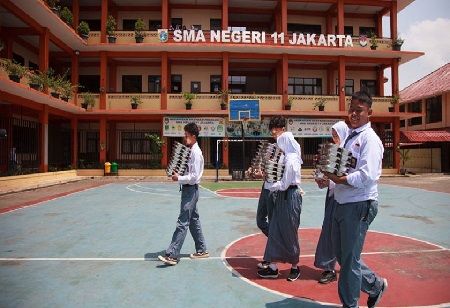
- The Jakarta administration has expanded its free private school program to 103 schools to reduce the number of out-of-school children in the capital.
- The initiative, backed by about Rp 253 billion, follows a Constitutional Court ruling requiring free basic education in public and private schools.
- Led by Governor Pramono Anung, the program also includes diploma releases and job support for vocational graduates to improve education access and employment outcomes.
The Jakarta administration has expanded its free private school program, significantly scaling up efforts to address the rising number of out-of-school children across the capital. This year, the city government is funding 103 private schools under the initiative, marking a major increase from 40 schools when the program was first introduced in July last year.
The program, backed by a budget of Rp 253 billion (approximately US$14.5 million), now covers a wide range of institutions, including 17 special needs schools, 41 junior high schools, 14 senior high schools, two elementary schools, and 29 vocational schools. Officials said the expansion reflects the administration’s commitment to improving education access and equity for all children in Jakarta.
The initiative follows a Constitutional Court ruling issued in May, which ordered the government to provide free elementary education in both public and private schools. However, the central government has yet to fully implement the directive, making Jakarta one of the few regions actively advancing compliance at the local level.
Also Read: BMW Korea Launches Green Skills Training for Elementary Teachers
Jakarta Governor Pramono Anung emphasized that education remains the administration’s top priority, expressing hope that Jakarta could serve as a national model for education reform in Indonesia. He also indicated that the number of participating schools could increase further depending on budget availability.
According to the Education Ministry, the city currently has 98,093 out-of-school children, including students who have never attended school, dropouts, and those who failed to continue after graduation. Lawmakers in the Jakarta City Council have urged stronger monitoring of the program to prevent misuse and ensure that benefits reach intended students, while also proposing expansion to around 200 schools to meet demand.
In a parallel effort, the administration also released 2,026 withheld diplomas, previously held due to unpaid fees, and supported 561 vocational school graduates in securing jobs abroad in countries such as Japan, Malaysia, and Germany. Deputy Governor Rano Karno said the initiatives highlight a new phase of vocational education development, positioning Jakarta students to compete in the global workforce while improving education opportunities and social mobility.