- 22 premier institutions in Northeast India form the Northeast India-Japan International Academic and Research Consortium to boost research and academic collaboration.
- IIT Guwahati and Gifu University will coordinate, facilitating 5,000 student exchanges annually over five years.
- The consortium promotes innovation, cross-disciplinary research, and stronger India-Japan ties in higher education and international collaboration.
In a landmark development for higher education and research in Northeast India, 22 premier institutions have signed a historic Letter of Intent (LoI) to form the Northeast India-Japan International Academic and Research Consortium. This collaboration brings together leading universities and research centers, including multiple National Institutes of Technology (NITs), Indian Institutes of Information Technology (IIITs), NERIST, AIIMS Guwahati, NERIWALM, Tezpur University, Gauhati University, Cotton University, and Assam Engineering College, signaling a major step toward strengthening international academic partnerships.
The consortium aligns closely with Japan’s strategic engagement in Northeast India since 2022, under the MEXT Inter-University Exchange Project, and is expected to significantly boost student exchanges, academic mobility, and cross-cultural learning. Over the next five years, the initiative aims to facilitate approximately 5,000 student exchanges in each direction, providing students and faculty with opportunities to immerse themselves in international research and collaborative academic experiences.
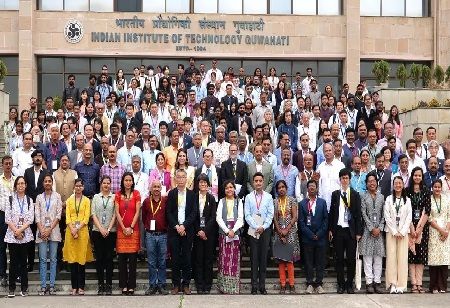
IIT Guwahati will serve as the nodal institution on the Indian side, while Gifu University will coordinate activities from Japan. The signing of the LoI took place during the Japan-NER Academia-Industry Cooperation Symposium 2026, an event jointly organized by the two institutions to foster discussion on collaborative research, technology development, and knowledge-sharing initiatives.
The consortium is expected to open new avenues for multilateral engagement in science, technology, and medicine, while promoting innovation, research partnerships, and the development of solutions to global challenges. By uniting institutions across multiple states, the initiative brings together engineers, medical professionals, scientists, and policymakers, creating a unique platform for collaboration that transcends borders.
Also Read: Promising Education Policy Practices for Access & Safety in Asia
“This marks a new beginning for the region, as institutions come together to form a consortium that will amplify our collective capabilities in research, innovation, and education”, said Devendra Jalihal, Director of IIT Guwahati. He emphasized that the partnership will not only enhance academic standards but also contribute to Northeast India’s growing prominence on the global research map.
Beyond boosting academic excellence, the consortium is expected to strengthen India-Japan ties in higher education and foster a culture of knowledge exchange, innovation, and cross-disciplinary collaboration. Students and researchers participating in the program will gain exposure to diverse educational systems, access state-of-the-art facilities, and collaborate on cutting-edge research projects in areas ranging from engineering and technology to medicine and environmental studies.
Experts see the initiative as a transformative step toward elevating Northeast India’s global academic footprint while creating opportunities for joint research, faculty development, and cultural understanding. By leveraging the strengths of both Indian and Japanese institutions, the consortium aims to nurture the next generation of globally competent scientists, engineers, and medical professionals.
With this historic collaboration, Northeast India is set to emerge as a hub for international academic and research excellence, fostering innovation, knowledge-sharing, and long-term partnerships that will benefit students, faculty, and the wider academic community for years to come.