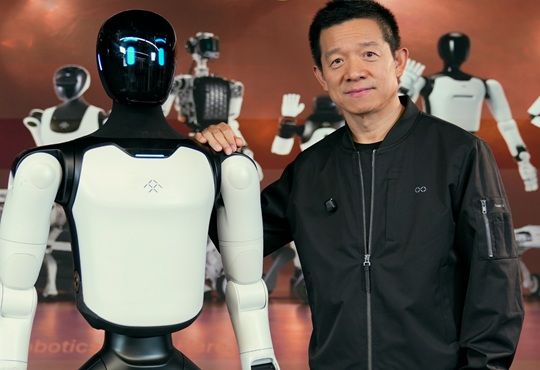
FF EAI Robotics Ecosystem Inc. (NASDAQ: FFR), a U.S.-based embodied AI robotics company, reported significant progress this week in expanding its presence in American K-12 and career education. In an update shared by founder and Global CEO YT Jia, the company said it has become an approved robotics supplier to a top-tier California public school district and has been added to that district’s procurement platform. More than 1,000 schools in the district can now purchase FFR robots and education productivity solutions directly.
The district’s career education center has already ordered several units, including the FX Navi and Aegis EDU robots. Jia described the purchase as an early step that the company hopes will serve as a model for wider adoption across the district.
In parallel, FFR signed Strategic Education Partnership Framework Agreements with two additional major California public school districts. One is described as among the state’s leading districts; the other is a large district in Los Angeles. Both partnerships cover K-12 through adult education. Under the frameworks the company and the districts plan to co-develop curricula, establish innovation labs, create career and technical education pathways, train teachers, and provide students with hands-on experience.
The goal is to link classroom learning with further study, practical application, and career development in Physical AI. Both agreements renew automatically at the end of their terms, which Jia said will allow future projects to move forward through a streamlined process. The second district has already purchased devices that include the Master Mini and Aegis EDU.
Outside California, FFR said it is advancing strategic partnerships and sales discussions with school districts in New York, Pennsylvania, Florida, and Texas. The company positions itself as a pioneer in U.S. K-12 robotics education and claims a leading position in the sector.
Jia outlined four reasons the California district-level agreements matter: they deepen collaboration with the public education system on Physical AI pathways; they create a replicable model for the more than 13,000 regular public-school districts and roughly 130,000 K-12 schools serving about 53 million students nationwide; they accelerate deployment of the company’s Four-Core Full-Stack AI approach in real classrooms, generating data that can improve its Education Brain; and they support broader efforts to prepare students for careers involving Physical AI.
On the governance side, FFR welcomed Carolyn Kissane as an independent director. Kissane serves as associate dean of New York University’s Center for Global Affairs. The company said her experience connecting academia, research, and industry will help expand its robotics education ecosystem, engage more developers, strengthen industry partnerships, and advance the Four-Core Full-Stack AI strategy across its four industry ecosystems.
Internationally, FFR held a Middle East launch event in Dubai. Six of its robots were introduced in the region. Working with local partners, the company demonstrated applications in education, security and inspection, entertainment, healthcare, and interactive sports. Jia called the event the start of a new chapter for Physical AI in the Middle East and indicated that video from the launch would be shared in a subsequent update.
Also Read: From Credit Scores to Classrooms: Asia Is Scaling Financial Literacy
Separately, related company FFAI released its third-quarter results. Management concluded that, as of September 30, 2026, all nine previously identified material weaknesses in internal control over financial reporting had been remediated and that the related controls were operating effectively. Jia noted that the remediation effort spanned nearly two years and strengthens the foundation for meeting public-company obligations, raising capital, and building investor confidence.
FFR describes itself as focused on the research, development, manufacturing, commercialization, and deployment of intelligent robotic technologies and industry solutions. Its “Four-Core Full-Stack” AI ecosystem covers the robotics lifecycle through a Physical AI Brain and developer platform, Physical AI devices, industry productivity solutions, and a data factory.
The company also operates RoboShare, a robot-sharing and services platform. Its stated philosophy is “One Brain, All Robots, Multi-capabilities,” aiming to support humanoid, biomimetic, and other form factors with a unified Physical AI Brain while expanding multi-task and multi-scenario capabilities.
The developments outlined in the latest weekly report center on concrete steps approved-supplier status, initial robot purchases, formal partnership frameworks, a board appointment, a regional product launch, and remediation of internal-control weaknesses rather than projected financial outcomes. Further details on the California projects, additional state-level activity, and the Dubai launch are expected in future company communications.