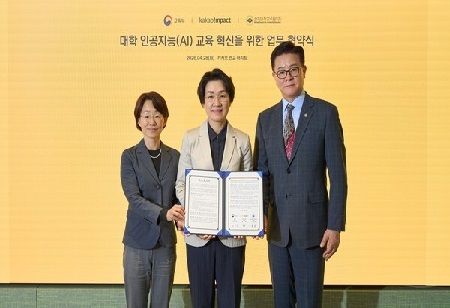
Kakao is taking a significant step toward strengthening AI education in South Korea through its corporate foundation, Kakao Impact Foundation, which has signed a memorandum of understanding with the Ministry of Education South Korea and the Korean Council for University Education. The agreement reflects a growing national effort to prepare students for the demands of a rapidly evolving digital economy by building stronger connections between government, universities, and industry.
At the center of the initiative is the expansion of the Tech for Impact Campus program, a hands-on, project-based learning model that encourages university students to work directly with nonprofit organizations. Through this collaboration, students design and develop technology-driven solutions to address real-world social challenges, blending practical AI skills with a strong sense of social responsibility. Since its launch at KAIST in 2023, the program has already reached nine universities and engaged around 500 students, demonstrating strong interest and early success.
Also Read: Ministry of Higher Education Launches Unified System for Student Training
The new partnership aims to scale the program nationwide, reaching up to 20 universities and expanding access beyond the Seoul metropolitan area. By doing so, it seeks to reduce regional disparities and ensure that more students benefit from AI talent development opportunities. The initiative is also aligned with the government’s broader plan to introduce core AI curricula, strengthening students’ foundational knowledge while preparing them for future careers in technology.
Beyond classroom learning, participants will receive mentoring from industry professionals, engage in hands-on projects, and present their work in showcase events, giving them valuable industry-oriented experience. Education leaders believe this collaborative approach will not only enhance technical skills but also foster innovation and long-term social impact, positioning students to play a meaningful role in shaping the future of AI.