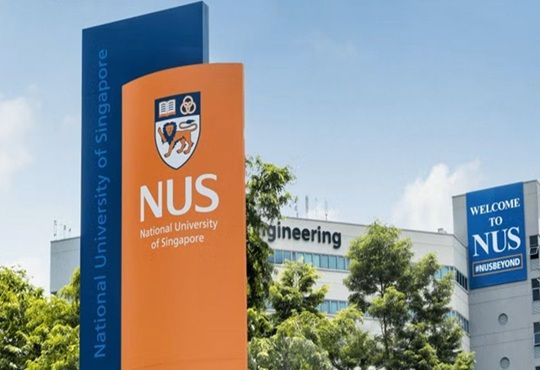
The National University of Singapore (NUS) will make artificial intelligence courses compulsory for every undergraduate from August 2026, marking one of the most extensive AI education overhauls in Singapore’s higher education system. The university also announced that all students, faculty and staff will receive free access to ChatGPT Edu, a university-controlled version of the popular AI tool, starting 31 August.
The new requirement forms part of a broader strategy to embed AI literacy across every discipline. At the centre of the plan is a new university-wide module titled Applied Generative AI: From Prompting to Evaluation. Additional AI-related courses will be integrated into the common curricula of major colleges, including the College of Humanities and Sciences, College of Design and Engineering, Business School and Healthcare Professional Education. These colleges account for more than 85 per cent of NUS’s undergraduate population.
Every major will also introduce at least one compulsory course that examines how AI is reshaping the relevant profession. Political science students, for example, will take a course on Artificial Intelligence and Public Policy, while business undergraduates will study Decision Analytics using Spreadsheets and AI. The approach aims to ensure that graduates understand both the capabilities and the limitations of AI tools within their chosen fields.
NUS deputy president (academic affairs) and provost Aaron Thean explained the university’s dual objective. “The core business of a university is really to develop the human, not to develop the AI,” he said. The institution wants all students to graduate “AI fluent,” while a smaller group will specialise more deeply in the technology.
From 31 August, every NUS student, faculty member and staff member will gain free access to ChatGPT Edu. The platform offers higher message limits and stronger privacy controls than the public version. More advanced AI tools will be piloted in courses that require deeper engagement, particularly in computing programmes.
Also Read: NTU Singapore, UMC Utrecht Team Up to Address Global Health
Alongside external tools, NUS is developing seven in-house AI teaching systems. These include a scenario generator that creates AI-powered simulations and a Socratic-style coaching system that prompts students with questions to strengthen their reasoning. Other tools will help instructors identify learning gaps, track participation and challenge students to critically evaluate AI-generated answers.
AI is already being applied in practical training. In the nursing programme, students take part in layered simulation exercises before entering real clinical settings. Fourth-year nursing student Nicholas Lau said the AI-powered simulations, which mimic real-time patient deterioration and require students to justify their decisions, have helped him stay calm and think critically under pressure.
The NUS announcement follows similar steps by Nanyang Technological University (NTU). In April, NTU made AI literacy lessons compulsory for all students and began providing access to premium Google AI tools. With approximately 29,600 undergraduates across 15 colleges, faculties and schools, NUS’s new strategy represents one of the largest institutional commitments to AI education in the region.
University leaders emphasise that the goal is not simply to teach students how to use AI tools, but to develop their ability to apply, question and evaluate them responsibly. By combining compulsory foundational modules, discipline-specific courses, free access to advanced platforms and purpose-built teaching tools, NUS aims to prepare graduates for a workplace in which AI fluency is increasingly expected across every sector.
The changes will take effect for the incoming cohort in August 2026, with the ChatGPT Edu rollout beginning at the end of this month. As Singapore continues to position itself as a global AI hub, the move by its largest university signals a clear institutional commitment to ensuring that every graduate leaves with a practical understanding of the technology shaping their future careers.