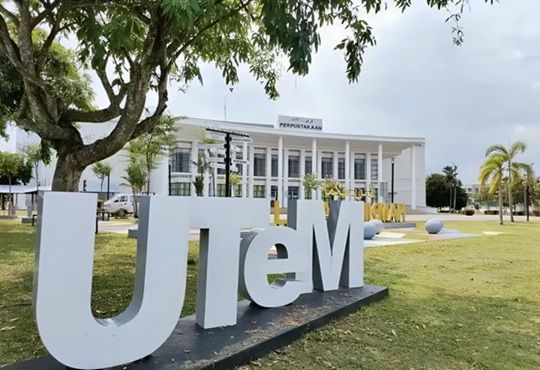
Universiti Teknikal Malaysia Melaka (UTeM) has broken new ground by becoming the first university in Malaysia to offer a dedicated bachelor’s degree in quantum computing technology, placing the nation firmly on the map of next-generation digital innovation.
Vice-Chancellor Professor Datuk Dr Massila Kamalrudin announced the milestone, revealing that the Bachelor of Computer Science (Quantum Computing Technology) programme successfully passed its screening stage in early July. The programme is designed to equip graduates with both rigorous theoretical foundations and hands-on practical skills in a field that is advancing rapidly across the globe.
“The new programme will produce graduates ready to meet Malaysia’s growing demand for experts in quantum computing technology”, Massila said. She emphasised that the curriculum reflects UTeM’s commitment to future-oriented education and supports the national agenda of developing highly skilled talent in advanced digital technologies.
A key feature of the initiative is the establishment of Malaysia’s first dedicated physical laboratory for quantum computing teaching, learning and research. The facility houses 23 quantum computers capable of two- and three-qubit operations, giving students direct access to real quantum hardware for experiments and practical training.
“This laboratory allows our students to move beyond simulation and work with actual quantum computing technology”, Massila noted. The hands-on approach aligns closely with the Technical and Vocational Education and Training (TVET) philosophy, prioritising problem-solving, industry-relevant applications and practical competence.
To further strengthen the programme, UTeM has forged strategic partnerships with three American universities: the University at Buffalo, the University at Albany and the University of Texas. These collaborations will cover curriculum development, joint research, talent development, academic mobility and the exchange of expertise in quantum computing.
Also Read: IBM to Advance Quantum Education for Students in Japan
Massila described the partnerships as vital to positioning UTeM as a regional hub for quantum technology education. “Through these alliances we will accelerate knowledge transfer and ensure our students and researchers remain at the forefront of global developments”, she said.
The first cohort is expected to enrol approximately 60 students in the near future. These pioneering undergraduates are scheduled to graduate in 2030, becoming Malaysia’s first batch of quantum computing technology specialists produced by a local university.
The programme arrives at a time when quantum computing is transitioning from pure research into practical applications across cryptography, optimisation, materials science, pharmaceuticals and artificial intelligence. Nations and institutions worldwide are racing to build quantum talent pipelines, and Malaysia’s early move through UTeM signals a proactive stance in this emerging domain.
By combining a specialised degree, a purpose-built laboratory and international academic partnerships, UTeM aims not only to produce job-ready graduates but also to catalyse a broader quantum research, innovation and industrial ecosystem within the country. Massila expressed confidence that the initiative will reinforce UTeM’s reputation as a leader in technical and advanced technology education.
The university’s track record in technical and vocational education provides a strong foundation for the new programme. Recent achievements, including top employer ratings for TVET graduates and the launch of Malaysia’s first TVET-based doctoral programme, underscore UTeM’s capacity to deliver industry-aligned, high-impact education.
As quantum technologies continue to mature, the availability of locally trained specialists will become increasingly critical for national competitiveness. UTeM’s Bachelor of Computer Science (Quantum Computing Technology) programme represents a significant step toward building that capacity, ensuring Malaysia does not lag behind in the global quantum race.
The university plans to continue expanding its quantum ecosystem through further industry linkages, research collaborations and continuous curriculum updates to keep pace with rapid technological change. With the first students expected to begin their studies soon, UTeM is set to write a new chapter in Malaysian higher education and advanced technology development.
Follow developments in quantum education and technical innovation as Malaysia positions itself for the next wave of digital transformation.