
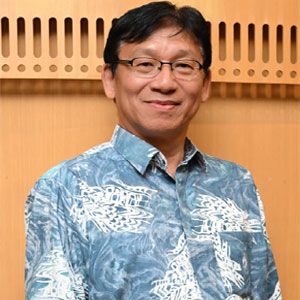
YBrs. Prof. Dr Tan Awang Besar
Rector
Arts and cultural education gain true meaning when tradition is preserved alongside contemporary practice through immersive, hands-on training and real-world performance exposure. By blending heritage-based learning with industry-aligned curricula, global collaboration, and practice-driven pedagogy, ASWARA nurtures confident, creative professionals equipped to contribute meaningfully to Malaysia’s evolving artistic and cultural landscape.
The National Academy of Arts, Culture, and Heritage (ASWARA) occupies a distinctive and respected position within Malaysia’s higher education ecosystem as a dedicated institution for the advancement of art, culture, and heritage. Functioning under the Ministry of Tourism, Art and Culture, it holds a rare institutional status by operating through its own Act, underscoring the nation’s commitment to preserving cultural legacy through structured education.
While not governed by the Ministry of Higher Education, this institute maintains stringent academic standards, with all programmes accredited by the Malaysian Qualifications Agency (MQA). This balance of autonomy and quality assurance enables the institution to remain culturally focused yet academically rigorous, guided by its core philosophy of moving forward with tradition.
Tradition as Foundation, Contemporary as Direction
ASWARA’s academic philosophy is deeply rooted in the belief that tradition and contemporary practice must evolve together. As an institution dedicated to art and culture, it places strong emphasis on traditional forms, ensuring they are preserved, practised, and passed on meaningfully to future generations. At the same time, contemporary elements are carefully integrated across disciplines, creating a balanced and relevant learning experience.
This approach is clearly reflected in faculties such as dance and music, where students receive comprehensive training in traditional forms alongside contemporary interpretations and techniques.
Theatre, fine arts, film, animation, multimedia, creative writing, and stage management similarly combine heritage-based knowledge with modern creative expression. The outcome is a curriculum that respects cultural roots while equipping students to engage confidently with evolving artistic landscapes.
A defining feature of education at ASWARA is its strong focus on practice-based learning. While theory forms an essential component, the emphasis lies firmly on hands-on training, performance, production, and real-world exposure. “Our students spend a significant amount of time in studios, rehearsal spaces,
workshops, and performance venues, allowing learning to unfold through hands-on experience. This practical orientation has translated into impressive outcomes, with graduate employability reaching approximately 98 percent, underscoring the relevance of our institute’s training to the creative industry,” says YBrs. Prof. Dr Tan Awang Besar, Rector of the National Academy of Arts, Culture and Heritage (ASWARA).
Facilities, Exposure, and Global Engagement
ASWARA’s learning environment is designed to support both academic depth and creative excellence. The campus houses an Experimental Theatre equipped with advanced stage design, lighting, and sound systems, supporting theatre productions, dance performances, and experimental showcases. An upgraded Orchestra Hall provides an acoustically refined space for recitals, ensemble work, and live concerts, serving both practice and public performances.
Dedicated dance studios with sprung floors, ballet bars, and audiovisual systems enable intensive choreography training, while smaller performance spaces cater to intimate productions and classroom showcases. Students specialising in animation, multimedia, and film benefit from high-end computer laboratories, green screen studios, and advanced digital editing tools. A modern broadcasting centre with 4K capabilities further strengthens training in film, theatre, and media production.
International exposure forms an integral part of the ASWARA experience. Through mobility programmes, institutional partnerships, and memoranda of understanding with universities across ASEAN, China, and other regions, students regularly engage in cross-cultural learning. Initiatives such as international folk-dance festivals, exchange performances, and visiting scholar programmes position this institute as an active regional hub for cultural exchange and collaboration.
ASWARA nurtures cultural legacy through disciplined practice, creative innovation, and academic excellence, shaping artists rooted in tradition and ready for the future‘‘‚‚
Talent Development, Recognition, and a Sustainable Vision
ASWARA’s academic strength is reinforced by its faculty, comprising experienced practitioners, educators, and researchers. Faculty members are encouraged to participate in workshops, masterclasses, and industry collaborations to remain aligned with current creative practices. Research in art, culture, and heritage is actively supported through access to specialised laboratories, studios, and heritage archives, while study grants enable continuous academic growth.
Student and alumni achievements further highlight the institution’s impact. ASWARA learners have earned national and international recognition across film, dance, and performance platforms, reflecting the institution’s success in nurturing world-class talent. In addition, the institute has taken a leadership role in accrediting professional art practitioners, contributing to higher standards and credibility within Malaysia’s creative sector.
Looking ahead, ASWARA is preparing for the next phase of growth by expanding degree, master’s, and doctoral offerings to international students. The institution is also working towards developing a smart green campus, integrating sustainability, digital infrastructure, enhanced security, and environmentally conscious design to create a holistic, future-ready learning ecosystem.
In conclusion, ASWARA stands as a powerful testament to Malaysia’s commitment to cultural education. By blending tradition with contemporary practice, prioritising hands-on training, and fostering regional and global collaboration, this institute continues to shape confident, skilled artists, strengthening its role as a leading institution for art and culture in the country.
Current Magazine
Editor's Column
How Asia Built the...
M R Yuvatha, Editor, Asia Education Review

10 Career Fairs:...
M R Yuvatha, Senior Correspondent, Asia...

Top 10 Colleges In...
Mandvi Singh, Managing Editor, Asia...
How can Online Course...
Gaurav Raina, Assistant Professor, IIT...
Editor's Guest Post

The Real Skills Gap in...
Dr Edyta Skibinska, Public Health Educator, Researcher & Founder,...
Preparing Students for Business...
Dr Deepak Bajaj, Academic & Campus Director, Deakin University GIFT...
The Evolution of Studying Abroad
Monica Kapadia Mehta, VP of Strategic Initiatives, Leap Scholar
🍪 Do you like Cookies?
We use cookies to ensure you get the best experience on our website. Read more...