
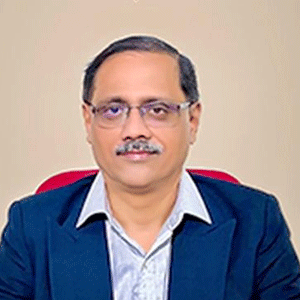
Dr. M. R. Rajwade
Principal
Artificial intelligence and data-driven decision-making are rapidly reshaping the skills organisations expect from technology graduates. As businesses adopt machine learning, analytics and AI across functions, the value of a Data Science education increasingly depends on how well students can translate concepts into solutions for real-world problems.
Classroom knowledge, therefore, needs to be complemented by industry exposure, project experience, research and familiarity with technologies that are evolving almost continuously.
Parle Tilak Vidyalaya Association's Sathaye College, an autonomous institution in Mumbai’s Vile Parle, is responding to this shift by building these elements into its approach to Data Science education. Parle Tilak Vidyalaya Association (PTVA), the parent organization, has completed 100 years.
The college, which completed 60 years, became academically autonomous in 2021, giving it greater flexibility to introduce programmes and learning initiatives aligned with changing requirements.
The Department of Information Technology established in 2001, is at the centre of this effort, supported by industry-oriented training, internships, research and additional AI certifications. The department introduced the MSc Data Science programme in the academic year 2022-23.
Designing a Degree Around What Happens Beyond the Classroom
The distinction in Sathaye College’s approach lies in how deliberately it takes students outside the conventional classroom model. The MSc Data Science programme brings together students from different academic backgrounds, including Mathematics, Physics, Computer Science and IT.
The first semester therefore establishes the foundation before students move into specialised areas such as Data Science, Data Analytics, Big Data Analytics and Machine Learning. The more interesting part begins when students have to apply what they have learned.
As part of the programme, students undertake on-the-job training of approximately 120 to 130 hours, where they work in an industry environment, gain practical experience and develop projects based on their training. In later semesters, they can choose between an internship and a research project. The structure allows students to pursue different career directions rather than forcing every learner into the same pathway.
Sathaye College also evaluates students on this practical work. Industry training, internships and research projects contribute to assessment, shifting the emphasis from simply reproducing concepts in examinations to demonstrating the ability to work with them. “This philosophy extends to projects conducted within the campus.
Students have been given real institutional problem statements, including requirements related to library and examination management, and asked to develop systems to address them. Over the last few years, this has resulted in solutions developed by students for problems they can directly observe”, says Dr. M. R. Rajwade, Principal.
Preparing for an AI Landscape That Changes Faster Than a Syllabus
For an institution teaching Data Science, there is a practical challenge: the technology landscape can change faster than a conventional academic curriculum. Sathaye College has responded by creating an additional layer of learning around its degree.
Alongside the MSc Data Science programme, the college has introduced AI certification courses covering areas such as computer vision, image processing and large language models. The courses are designed around hands-on assignments and capstone projects, giving students an opportunity to build capabilities in areas that may evolve rapidly outside the core degree structure.
The same thinking is being introduced at the undergraduate level through a course on AI Tools for Academic Excellence. Rather than treating AI as a specialist subject confined to technology students, the initiative acknowledges that AI tools are already becoming part of students’ academic and professional lives.
The college also uses workshops and specialised sessions to expose students to domains beyond the core curriculum. Previous initiatives have included areas such as bioinformatics, computer vision, image processing and quantum computing. This broader exposure can help students understand where Data Science and AI intersect with different industries before deciding where they want to specialise.
Bringing Industry and Research into the Same Learning Ecosystem
Sathaye College’s industry orientation is also reflected in its collaboration with the Computer Society of India, through which external resource persons and trainers can engage with students. Training is delivered through both online and offline modes, including sessions conducted in the college laboratories.
For students, such interactions serve a purpose beyond adding another workshop to their academic record. They provide access to professionals working outside the academic environment and expose learners to how technologies are being applied in practice.
The distinction in Sathaye College’s approach lies in how deliberately it takes students outside the conventional classroom model‘‘‚‚
Research provides another route for students who want to explore problems more deeply. The college conducts an annual Fledgling Research competition, where students identify real-world problems and work towards developing solutions. Strong projects can subsequently be encouraged to participate in Avishkar, a university-level research competition. “This creates two complementary pathways: students interested in employment can build industry experience through training and internships, while those inclined towards research can develop projects around real-world problems”, adds Dr. M. R. Rajwade.
Building a Portfolio, Not Just a Qualification
The next phase of Sathaye College’s strategy is to make the MSc Data Science experience even more portfolio-oriented. Its plan is to continue offering AI certifications across the four semesters of the programme, potentially allowing students to graduate with their master’s degree accompanied by four additional AI certifications.
The reasoning is straightforward: a technology graduate increasingly needs evidence of capability beyond a degree certificate. Projects, internships, research work and specialised certifications can collectively demonstrate what a student is capable of doing.
This is also where Sathaye College’s broader vision comes into focus. “The institution is not attempting to predict which single AI technology will dominate the next decade. Instead, it is creating multiple avenues through which students can adapt industry exposure for those seeking professional careers, research opportunities for academically inclined learners, and specialised certifications for students seeking additional technical depth”, shares Dr. M. R. Rajwade.
With further industry collaborations also on its roadmap, PTVA’s Sathaye College is building its AI and Data Science offering around a simple but increasingly important principle, technology education should not end with learning the technology. It should equip students to apply it, question it, build with it and continue learning as it evolves.
Current Magazine
Editor's Column
10 Educational, Sports...
M R Yuvatha, Editor, Asia Education Review
Top High-Paying Jobs...
M R Yuvatha, Editor, Asia Education Review
How Asia Built the...
M R Yuvatha, Editor, Asia Education Review
10 Career Fairs:...
M R Yuvatha, Senior Correspondent, Asia...
Editor's Guest Post

The Future of Learning: Building...
Lolitta Suffian, Senior Vice President of Customer Experience, Bank...

The Real Skills Gap in...
Dr Edyta Skibinska, Public Health Educator, Researcher & Founder,...
Preparing Students for Business...
Dr Deepak Bajaj, Academic & Campus Director, Deakin University GIFT...
🍪 Do you like Cookies?
We use cookies to ensure you get the best experience on our website. Read more...