Gulf Medical University: Where Medical Education Meets the Science of Longevity
Gulf Medical University: Where Medical Education Meets the Science of Longevity

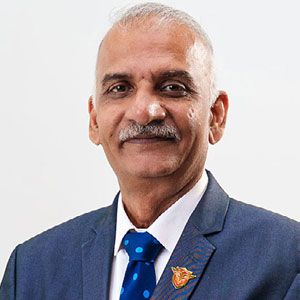
Venkatramana Manda
Chancellor
Healthcare education across the UAE is undergoing a quiet but deliberate transformation, one that extends beyond training physicians to treat illness toward preparing them to anticipate it. As global interest in preventive medicine and healthy ageing accelerates, the country's academic institutions are beginning to embed longevity science directly into the medical curriculum, reshaping how future doctors, researchers, and allied health professionals are trained from the very start of their careers.
Gulf Medical University (GMU), based in Ajman, stands at the center of this shift, recently announcing plans to launch what it describes as the UAE's first-of-its-kind academic programs dedicated to longevity medicine, a move that signals how seriously the institution is approaching the intersection of education and preventive healthcare.
Founded in 1998 by Dr Thumbay Moideen, Founder President of Thumbay Group, Gulf Medical University began as Gulf Medical College before evolving into a full-fledged university with an international student base. His founding vision centered on transforming healthcare education in the region, and that vision has since grown into what the university describes as a comprehensive academic health system, one that integrates education, clinical care, and research under a single institutional umbrella.
As part of Thumbay Group, now marking 29 years of operation, it positions itself around the idea of building excellence across all three pillars simultaneously, rather than treating them as separate functions.
A Full Academic Ecosystem Built Around Healthcare
What distinguishes Gulf Medical University 's approach is the breadth of its academic offering. The university's College of Medicine anchors its programming with a six-year Doctor of Medicine (MD) degree, alongside a Bachelor of Biomedical Science and the Thumbay International Pathway Medicine program, designed to prepare international students for medical study.
Beyond medicine, the university's College of Dentistry offers a Bachelor of Dental Surgery, while the College of Pharmacy provides both a Bachelor of Pharmacy and a Doctor of Pharmacy track.
The College of Health Sciences extends this further, offering specialized degrees in Physiotherapy, Medical Laboratory Sciences, Medical Imaging Sciences, Anesthesia Technology, Audiology and Speech Language Pathology, and Optometry, reflecting an intent to train professionals across the full spectrum of allied healthcare rather than concentrating solely on physicians.
The College of Nursing offers a Bachelor of Science in Nursing, while the more recently established Thumbay College of Management and AI in Healthcare introduces degrees in Healthcare Management and Economics and Applied AI in Healthcare, pointing to where the institution sees healthcare heading next: toward data-driven, technology-integrated care models.
The university also runs a Thumbay College of Veterinary Medicine, offering a Doctor of Veterinary Medicine program, extending its health sciences focus beyond human medicine.
Supporting this academic structure is a network of specialized research institutes, including the Thumbay Research Institute for Precision Medicine, which focuses on interdisciplinary cancer and diabetes research, along with the Thumbay Institute of Population Health, the Thumbay Institute for AI in Healthcare, and the Thumbay Institute of Health Workforce Development.
Additional centers, such as the Center for Leadership and Innovation in Health Professions Education, the Center for Interprofessional Education, Research and Practice, and the Thumbay Institute of Clinical Simulation, reinforce the university's emphasis on training healthcare professionals through applied, hands-on methods rather than theoretical instruction alone.
Gulf Medical University is transforming healthcare education by making longevity, prevention, and innovation central to tomorrow's medical practice‘‘‚‚
Venkatramana Manda says, "Crucially, Gulf Medical University's academic model is closely integrated with real-world clinical infrastructure. Through its network of Thumbay University Hospital, Thumbay Hospital, Thumbay Hospital Day Care, Thumbay Dental Hospital, Thumbay Medicity, and supporting physical therapy, laboratory, pharmacy, and outpatient services, students gain early and continuous exposure to patient care. This integrated approach embeds hands-on clinical experience throughout their academic journey, rather than reserving it for later stages of specialization".
Looking Ahead!
Gulf Medical University 's recent announcement regarding new academic programs in longevity medicine reflects a broader institutional trajectory, one that treats preventive and age-related health science not as a specialization added after core medical training, but as a subject worth introducing at the foundation.
Paired with its recent groundbreaking on a new landmark research centre, the university appears to be positioning itself to expand its research capacity alongside its teaching programs, a combination that could strengthen its role in advancing longevity-focused healthcare in the region.
As the demand for preventive and longevity-oriented medical expertise continues to grow across the UAE, institutions that can combine academic instruction with functioning clinical and research infrastructure, as it does through its affiliated hospitals and specialized institutes, may be better positioned to shape how this emerging field is taught and practiced.
Should the university's new longevity programs progress as announced, Gulf Medical University could become a reference point for how medical education in the region adapts to an ageing population and a rising emphasis on prevention over treatment, reinforcing the idea that meaningful advances in longevity science begin not in the clinic, but in the classroom.
Current Magazine
Editor's Column

How Asia Built the...
M R Yuvatha, Editor, Asia Education Review
10 Career Fairs:...
M R Yuvatha, Senior Correspondent, Asia...

Top 10 Colleges In...
Mandvi Singh, Managing Editor, Asia...
How can Online Course...
Gaurav Raina, Assistant Professor, IIT...
Editor's Guest Post
The Real Skills Gap in...
Dr Edyta Skibinska, Public Health Educator, Researcher & Founder,...
Preparing Students for Business...
Dr Deepak Bajaj, Academic & Campus Director, Deakin University GIFT...
The Evolution of Studying Abroad
Monica Kapadia Mehta, VP of Strategic Initiatives, Leap Scholar
🍪 Do you like Cookies?
We use cookies to ensure you get the best experience on our website. Read more...