
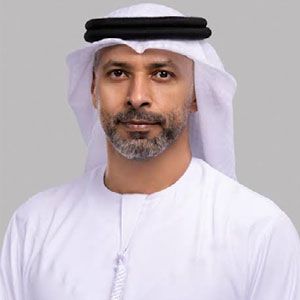
H.E. Prof. Ebrahim Al Hajri
President
Healthcare education in the UAE is increasingly shaped by institutions that treat research and teaching as inseparable, and Khalifa University exemplifies this approach with particular clarity. Rather than isolating medical training within a single faculty, the university has built an academic structure where engineering, computing, and medicine intersect, allowing questions about ageing, disease prevention, and human health to be studied through multiple scientific lenses at once.
This interdisciplinary foundation has positioned the university as one of the region's most closely watched institutions for its recent rise in the QS World University Rankings 2027, where it became the first UAE university to enter the global top 150, climbing to 147th worldwide, a jump attributed to its performance across research, innovation, and global engagement.
Founded as a research-intensive university based in Abu Dhabi, Khalifa University brings together three colleges, three research institutes, and twenty specialized research centers spanning thirty-six departments. Its academic offering ranges from the College of Engineering and Physical Sciences and the College of Computing and Mathematical Sciences to the College of Medicine and Health Sciences, a structure designed to take students from undergraduate study through to doctorate-level research within a single institutional ecosystem.
The university has also been recognized as the top institution in the MENA region in the Times Higher Education Young University Rankings 2024, and reports that more than ninety percent of its students receive scholarship support, drawing a student body representing over seventy nationalities.
Where Biomedical Research Meets Preventive and Longevity Science
What distinguishes Khalifa University within the UAE's healthcare education landscape is the depth of biomedical and longevity-adjacent research emerging from its laboratories.
Faculty within Biomedical Engineering and Biological Sciences have contributed to work with direct relevance to healthy ageing, including research into wearable biosensors and their ability to predict health outcomes and support personalized, preventive approaches to longevity, conducted in collaboration with the Institute for Healthier Living Abu Dhabi.
Separately, researchers have developed the UAE's first human-induced pluripotent stem cells, opening pathways toward personalized medicine applications, including conditions linked to obesity and chronic metabolic health. The university's Department of Biological Sciences has also produced research connecting dietary choices to the management of chronic autoimmune conditions such as Multiple Sclerosis, reflecting a broader institutional interest in how lifestyle and nutrition intersect with long-term disease prevention.
Further afield, faculty within Biomedical Engineering and Biotechnology have explored regenerative medicine applications drawn from regional resources, examining how tissues can contribute to wound healing and sustainable healthcare solutions. Meanwhile, the university's nanosensor research for detecting DNA sequences signals ongoing investment in diagnostic tools relevant to early and precise disease detection, a foundational principle of preventive healthcare.
Complementing these efforts, the university's Public Health and Epidemiology programs, led by internationally affiliated faculty, extend the institution's health-related research into population-level genetic and epidemiological study, broadening its footprint beyond individual patient care into public health science.
Khalifa University is advancing preventive healthcare by integrating biomedical research, precision medicine, and technology to shape the future of longevity science‘‘‚‚
A Research Culture Anchored in National Priorities
H.E. Prof. Ebrahim Al Hajri echoes, "Khalifa University's approach to health-related research is closely aligned with its identity as a hub for applied, industry-connected science. Through collaborations with national organizations across the energy, technology, and environmental sectors, the university ensures that academic research translates into practical, real-world solutions.
This translational approach is reflected in our medical and biological sciences programs, where research focuses on predicting disease through wearable technologies, advancing diagnostic innovations, and exploring how genetics, nutrition, and biotechnology can help extend healthy years of life rather than simply treating illness after it occurs”.
The university's recognition by UAE leadership, including commendation from the President for its rise in global rankings and its research contributions, further underscores how closely its scientific output aligns with national ambitions around innovation and future-ready generations, a phrase reflected in messaging from the university's own leadership and the UAE's broader vision for education as a long-term national investment.
The Road Ahead!
As the UAE continues to position itself as a serious contender in longevity and preventive healthcare research, Khalifa University’s cross-disciplinary model, spanning biomedical engineering, biological sciences, public health, and computing, may prove to be one of its most valuable assets.
Its recent global ranking rise suggests growing international recognition of this approach, and its ongoing work in wearable health technology, stem cell research, and diagnostic innovation indicates a university actively building toward the future of preventive medicine rather than simply keeping pace with it.
Current Magazine
Editor's Column

How Asia Built the...
M R Yuvatha, Editor, Asia Education Review
10 Career Fairs:...
M R Yuvatha, Senior Correspondent, Asia...

Top 10 Colleges In...
Mandvi Singh, Managing Editor, Asia...
How can Online Course...
Gaurav Raina, Assistant Professor, IIT...
Editor's Guest Post

The Real Skills Gap in...
Dr Edyta Skibinska, Public Health Educator, Researcher & Founder,...
Preparing Students for Business...
Dr Deepak Bajaj, Academic & Campus Director, Deakin University GIFT...
The Evolution of Studying Abroad
Monica Kapadia Mehta, VP of Strategic Initiatives, Leap Scholar
🍪 Do you like Cookies?
We use cookies to ensure you get the best experience on our website. Read more...